I am often perplexed when it comes to the truths found in the Bible. It’s hard for us humans to fathom the nature of God and His ways.
When I’m feeling frustrated about my lack of understanding, I’ll often remember that God tells us:
For my thoughts are not your thoughts, neither are your ways my ways (Isa: 55:8).
Reading this verse usually makes me feel better about myself, as I once again realize this profound truth: that there is a God, and I am not Him.
I believe that there are certain holy truths that we’re not meant to fully grasp. We can try all we want, but our brains are just not capable of understanding the ways of a God who created and maintains the entire universe.
That being said, following are some of the most notable paradoxes that we find in the Bible. These aren’t contradictions as skeptics would like to call them, but rather dual truths that we can’t fully explain.
I can’t take credit for coming up with these. Although anyone could read through the Bible and discover them for themselves, I came across these on a recent message from Dr. Michael Youssef called, “How Does Our Attitude Affect Our Joy?”.
So let’s dig in.
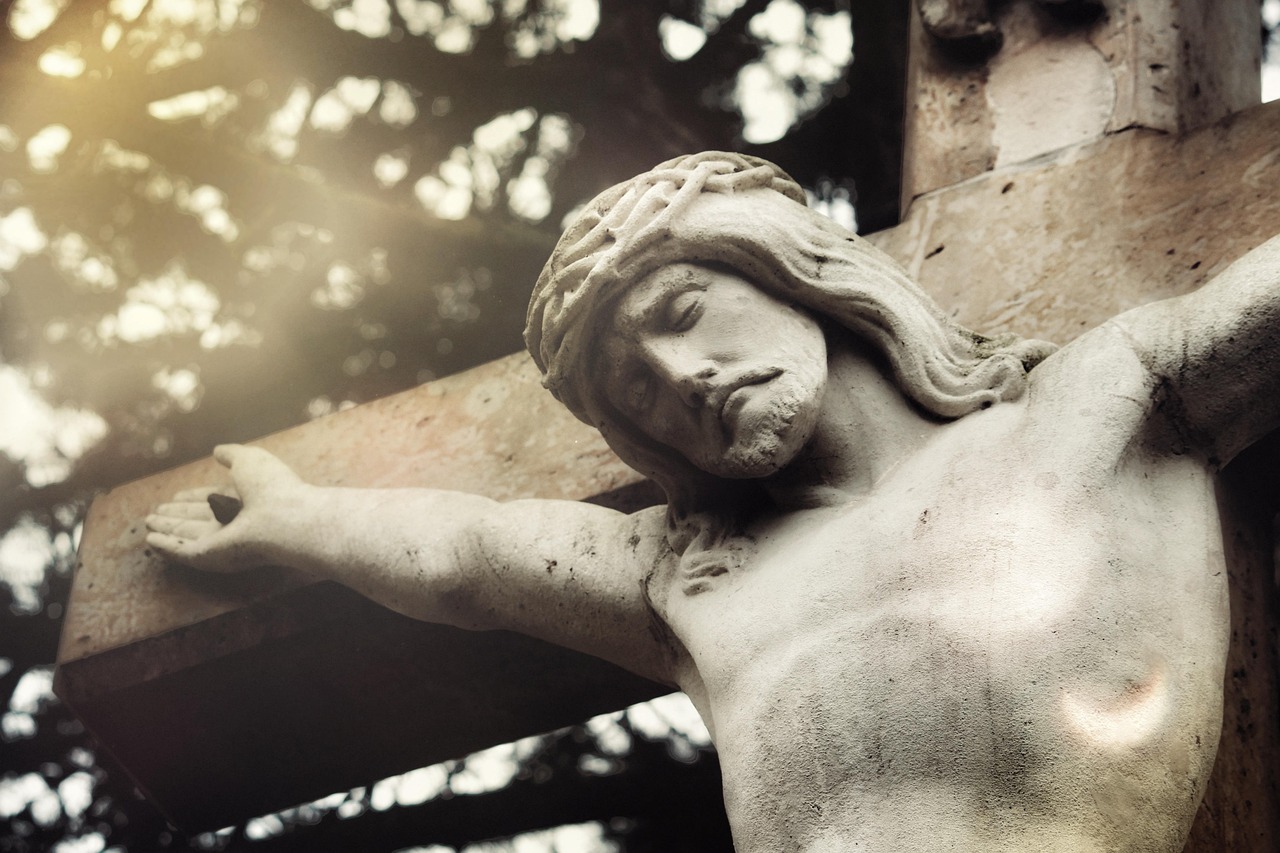
Jesus is fully God, yet fully man.
And the Word became flesh and dwelt among us, and we have seen his glory, glory as of the only Son from the Father, full of grace and truth (John 1:14).

For in him the whole fullness of deity dwells bodily (Col. 2:9).

[God] was manifested in the flesh (1 Tim. 3:16a).
Christianity is the only religion I know of where its deity actually came to earth to live with mankind. In all the other religions of the world, the creator is a distant being who is untouchable and unknowable to its adherents.
Not so with the living Jesus. He was born in a lowly manger among animals. He didn’t perch Himself on a throne and order His subjects to bow at His feet.
Rather, He submitted Himself to the will of the Father and died a gruesome, tortuous death to secure salvation to those who would choose to believe in Him.
In this way, Jesus became as much human as you or I, yet remained as much God as the Father is.
Difficult to explain? Yes. But also true.
The Bible is written by human beings, but every word is authored by the Holy Spirit.
All Scripture is breathed out by God and profitable for teaching, for reproof, for correction, and for training in righteousness (2 Tim. 3:16).

For no prophecy was ever produced by the will of man, but men spoke from God as they were carried along by the Holy Spirit (2 Pet. 1:21).

And now, go, write it before them on a tablet and inscribe it in a book, that it may be for the time to come as a witness forever (Isa. 30:8).
God wanted us to have His preserved, written word. But rather than just personally hand it to us, He purposely used man to help write it down.
Through the inspiration of the Holy Spirit, around 40 authors over about 1500 years recorded God’s words. Although each book of the Bible contains elements of the individual who wrote it, each is ultimately written by the divine Author as He saw fit.
Just look at the four gospels that give the account of Jesus’s life. Each author tailored his book to a different audience with a somewhat different focus, yet each tells the story of Jesus without contradicting the other gospels.
Every other book of the Bible is the same. They tell God’s story and the redemption of mankind while allowing the individual authors to insert a little of their own personalities into the manuscripts.
So—authored by God, written by man.
God eternally secures the believer’s salvation, yet we are commanded to obey Him.
I give them eternal life, and they will never perish, and no one will snatch them out of my hand (John 10:28).

And do not grieve the Holy Spirit of God, by whom you were sealed for the day of redemption (Eph. 4:30).

Truly, truly, I say to you, whoever hears my word and believes him who sent me has eternal life. He does not come into judgment, but has passed from death to life (John 5:24).
The “once save, always saved” debate is alive and well in the church today. Yet God’s word stresses the point that once we accept Christ, our destiny is sealed.
Some would ask if obedience to God is necessary to maintain our salvation.
However, it’s not a matter of obeying God to remain saved and hold on to our eternal inheritance. Rather, Christians willingly choose to obey God because He sacrificed His son for our salvation.
God expressed His love for us first, even when we weren’t worthy of it. Consequently, we love and honor Him in return by following His commandments.
Even though we may sin after becoming a Christian, this doesn’t negate our salvation.
Instead, our confidence in our eternal destiny gives us hope that even when we make mistakes, God still loves us and will welcome us home when the time comes.
God is sovereign in dealing in the affairs of His children, yet He responds to our prayers.
He does according to his will among the host of heaven and among the inhabitants of the earth; and none can stay his hand or say to him, “What have you done?” (Dan. 4:35b).

The prayer of a righteous person has great power as it is working (James 5:16b).

If you abide in me, and my words abide in you, ask whatever you wish, and it will be done for you (John 15:7).
This paradox is particularly difficult for me. How can God control the entire workings of the universe and, at the same time, allow us to have influence over individual events in our lives through prayer?
It’s easy to tell ourselves that God’s will will prevail no matter what. While this is true, it is important to understand that our prayers play a crucial role in shaping our lives and those around us.
Yes, this is difficult to grasp. But it is an important doctrine of our faith and represents God’s willingness to allow us to impact our world.
The important thing to remember about these paradoxes, and any others we find in the Bible, is that they shouldn’t shake our faith in a good, loving, all-powerful God.
Instead, we should focus on the fact that God’s nature and power are so far beyond our comprehension, we can never hope to fully understand them on this side of Heaven.
That’s where faith comes in. And faith “is the assurance of things hoped for, the conviction of things not seen” (Heb. 11:1).











 Along Bumpy Roads