5 Suggestions For the New Year…With a Twist (Plus 2 Bonus Suggestions)

Everybody likes lists, right? Well, in no particular order here’s my list of New Year’s suggestions (nobody sticks to resolutions), but with a slight twist. Rather than focusing on ways to better ourselves in the new year (such as getting into shape, saving more money, etc.), my suggestions will take our eyes off ourselves and onto bettering our fellow man.

1.  Pray for our leaders

Our leaders are human just like the rest of us, so they need our prayers to help them make wise choices in governing our nation. We’ll have a new President in less than a month, and he’ll definitely need the prayers of all of us. May we seek God to grant him wisdom for the sake of our nation and all of God’s people around the world.

2.  Perform random acts of kindness

This one gets mentioned a lot throughout the year anyway, but now is as good a time as any to remember that there are people all around us who are hurting. A little kindness in the form of a smile or a few polite words can go a long way when someone feels all alone in the world. You may simply tip a little extra at your favorite coffee shop. Or for more of a challenge, try to say one uplifting thing to someone each day.

3.  Volunteer to serve in your church or community

Most churches routinely run short of volunteers. Why not try your hand in the kids’ ministry or on the tech crew? Or you may want to help out at a local homeless shelter serving warm meals to those in need. Many communities offer an after-school tutoring program where you can serve kids. The possibilities are endless.

4.  Get to know someone new

Introduce yourself to that quiet guy who works in another department at work. Or strike up a conversation with a stranger while you’re waiting in line at the grocery store. You never know where it may lead. And if you never see each other again, you may at least have brought a little joy into someone’s life for a few moments. Try to do this at least once or twice a week.

5.  Be the person you look for others to be

Go the extra mile in your daily life. Pick up that stray piece of trash in the park. At home, wash the dishes if you see them stacked up in the sink. Organize the office to take up a donation or to cook meals when a coworker is sick. When you see a need, don’t wait for someone else to fill it. Take the initiative and be that someone yourself.


These suggestions aren’t for the direct benefit of our own selves, but we can’t consistently give to others without in return bettering our own lives.

 
line-divider

Now, I have two bonus suggestions intended for ourselves that are more along the lines of traditional New Year’s resolutions.

6.  Memorize two bible verses a week

Pick two verses that are meaningful to you and commit them to memory. You might take one from the Old Testament and one from the New Testament. Do whatever works for you. At the end of the year you’ll have over 100 verses memorized! If memorizing just one verse a week works better for you, then do that instead.


7.  Make a reading list of 10-15 books for the year

These could be whatever kind of books you want, but I recommend they inspire you and cause you to think. Maybe you like biographies, or perhaps an intriguing novel is more to your liking. Select spiritual books, or even books of poetry. Just make the list and commit to reading your way through it this year. Even if don’t read everything on your list, you’ll be better for trying.


Your turn!

What about you? Do you have any special or unique New Year’s “Suggestions”?

Leave me a comment and let me know.

God’s Guidance Down Life’s Roadway

car-1576894_1280.jpg

Have you ever wondered why God doesn’t just speak plainly to us?

If you’re like me you often find yourself wishing that God would use an audible voice and just tell us what to do. “Bob, you need to go ahead and take that job in Atlanta. You’ll be much happier there.” Or, “Susan, didn’t I tell you just the other day you needed to get rid of that no-good, freeloader boyfriend of yours? Now go ahead and break it off. Go ahead.”

Well, God generally doesn’t do that. So, on those ultra-rare occasions when I believe God is saying something to me directly, I sit up and take notice.

One of those occasions occurred today.

I believe God revealed something important to me early this morning when I was in a semi-conscious dream state somewhere between waking and sleep. Is it a coincidence that yesterday I saw the headline to an article about how God speaks to us in our dreams?

In this dream-like state I was driving. I had just turned onto a main thoroughfare in town and was heading downtown. The realization hit me that although both my destination and my route were set, individual details regarding my driving were left up to me.

God had chosen this particular road for me to follow to my destination, but any number of different scenarios could occur involving different lanes, different rates of speed, etc.

This short drive compares to how God leads and guides us. He may give us a destination or a mission , but the individual moves to get there are ours to make. We determine which lane to drive in and when we’re need to change lanes; how fast to drive; and even which sights along the road to pay attention to.

And God is OK with us making these kinds of decisions along the way. He doesn’t care what lane we’re in, or if we drive with one hand or two. We can follow the car in front of us closely, or fall back a little. He gives us this kind of leeway.

Furthermore, if we’re living (driving) in accordance with God’s purpose for our life, then He will aid us along the way, often smoothing out traffic, opening up lanes, giving us good weather and scenic views. Of course, the way won’t always be smooth and without potholes, but He often does supernaturally work things out behind the scenes to help advance our course.

What I think this means for us is that we have a substantial amount of say in how our lives live out, even living within God’s will.

For example, I want to become a successful writer with a full-time writing career and income to match it. I believe that God is OK with me making choices along the way as to what I write and when. I can focus on a novel right now, or maybe short stories, or perhaps freelancing. All this is fine so long as I remain in prayer and humility before God, putting Him first in my life.

This realization is very freeing, but also a little scary.

I like the idea of freedom in what I write, but this freedom also intimidates me with the myriad of options available to pursue. Trusting in God is critical at this point. By remaining tight with Him, we don’t need to fear, but instead can relax and enjoy our journey along the way.

road-348544_1280

“Whether your platform is huge, or you’re working in obscurity, you need to ask yourself, ‘Am I fulfilling my assignment?’”

-unknown

Jehovah’s (False) Witnesses

truth4

“Come over here for a second. I want to show you something.” My coworker, a devout Jehovah’s Witness, summoned me to his work area.

Generally, I try to avoid any sort of in-depth conversation with him, because the subject always gravitates toward his deeply-held beliefs. This belief system, by the way, is dictated by the Governing Body of Jehovah’s Witnesses, using the New World Translation (their translation of the Bible) and the interpretation thereof. The tenets of the Jehovah’s Witnesses faith are disseminated throughout their worldwide membership from their headquarters in Brooklyn, New York.

As soon as I heard him say he wanted to show me something, I knew it would be something related to the JW religion.

In this case, he wanted to show me a video the media arm of the organization had produced that describes God’s wishes for the marriage relationship. With all the LGBTQ headlines in the news lately, this certainly has been hot topic.

I was somewhat surprised by the JW video’s content. It was interesting how closely much of the short video agrees with the interpretation of scripture that most evangelicals would hold. The Jehovah’s Witnesses espouse a one man/one woman marriage, denouncing other types of unions.

The video quoted several different verses which, of course, were taken from their New World Translation (which has been proven inaccurate many times – here, here, and here just to reference a few). The cartoon mother in the video even references “the resurrection”.

However, the mention of Jesus as God was blatantly missing, as was the concept of salvation by faith in Jesus alone. In fact, the video says that we can someday go to “Paradise” if we follow God’s guidelines, completely leaving Jesus out of the picture.

line-divider

Watching the video made me think of the passage in scripture where the scribes accuse Jesus of being demonically possessed by Beelzebul because of his own ability to cast out demons. He retorts the scribes and explains the impossibility of their accusation. “And if Satan has risen up against himself and is divided, he cannot stand, but is coming to an end” (Mark 3:26 ESV).

If we believe the Jehovah’s Witnesses religion/cult was engineered by the dark side (which I do), then at first look the organization appears to be working against itself. Even though the JW’s are missing key beliefs that are necessary for the Christian faith, isn’t their positive message (such as in this video) working against the cult’s overall insidious intent? Are you confused yet?

Much of the group’s theology agrees with evangelical beliefs, and to some degree has probably brought its adherents closer to God, at least as they themselves see it. Perhaps the organization’s work actually ignites in its followers a passion to search for and cling to God the Father. And because these people seek God, they are more likely to do good works for others and to live an overall more moral life.

All this sounds good until you realize that anybody who seeks God in this way, without looking to Jesus his Son for salvation, is missing the boat entirely. Without salvation in Christ alone as the fundamental piece of their faith, everything else is for nought. They have denied him as Lord and Savior and instead tried to attain righteousness in accordance with man’s interpretation of morality.

Perhaps the dark side is willing to let morality and good works be an outcome of the JW organization, so long as its adherents never come to a saving belief in the deity of Jesus Christ. Indeed, that might be the ultimate win for that side — deceiving people into thinking they are truly seeking God, doing the right things, improving their lives, etc., when in actuality all that effort is for nothing.

“Jesus said to him, ‘I am the way, and the truth, and the life. No one comes to the Father except through me’” (John 14:6 ESV).

truth2

Metal or Mozart: Musical Musings From Marxism to Mice

Musical training is a more potent instrument than any other, because rhythm and harmony find their way into the inward places of the soul.

                                                       – Plato, The Republic

Guitar-music-notes

Music has always played a huge role in my life, even when I was a little kid. At about age seven I began listening to pop and disco music, and then in middle school began venturing into harder acts like KISS and AC/DC. I discovered Def Leppard in 8th grade and was immediately hooked on their hard yet melodic sound. They opened up a whole new world of music to me. By the time I’d begun high school I was listening almost entirely to heavy metal. At least this is what it was called it at the time. Purists would probably term it pop metal or glam metal, or the awful term “hair metal.” I wasn’t into the heavier bands like Metallica and Megadeth and definitely wasn’t into the death metal or thrash scene.

From early in the morning to late at night music has always been an essential part of who I am. In middle school I felt so grown up staying up late at night with the volume cranked up on my headphones. I’ve always identified mostly with heavy metal and disco, the music that has provided the anthem to my life. I’ve often imagined my life as a movie or a music video, with intense, high energy music accompanying the images on the screen.

Things began to change for me, however, after I became a Christian as a sophomore in high school. I soon realized that the heavy metal I was so involved with was not honoring God. I couldn’t reconcile my new beliefs with metal’s rebellious and often violent message, so I gradually quit listening to it. My bedroom walls had been plastered with pictures I had cut out from Circus and Hit Parader. Soon I took down all these images of the bands I idolized.

Less than a year after accepting Christ into my life I felt a strong conviction to remove all secular pop and rock music from my life. I had attended a presentation that vividly illustrated the darker side of rock music, including sinful and satanic-inspired song lyrics, backward masking (I still don’t know if I believe that was a real thing or not), and simply the hedonistic beliefs and lifestyles of the musicians themselves. I also read a couple of books covering basically the same subject: the evils of rock music and the negative impact it has on those who indulge in it.

I ultimately threw out all my records and cassettes of the music I’d loved, and also changed the presets on my car radio. Jazz, classical, and easy listening became the music that filled my ears and my life for the next few months.

The combination of my new Christian beliefs and my simultaneous separation from pop and rock music put a definite strain on my relationships. In particular, my old friends, the ones with whom I used to drink and carry on, did not understand my choices. I made a lot of mistakes with those friends during this time, and probably came off as someone holier-than-thou who looked down on them.

Through a series of events I ultimately began listening to pop music again. I had been totally out of the loop on current music for several months. I vividly remember the first time hearing “Conga” by Gloria Estefan and Miami Sound Machine. While it was new to me, my friends were already familiar with it. For a while afterwards I’d occasionally hear a song that I thought was new, but that everyone else already heard. I’d then realize that it had been released during the time when I had had no exposure to popular music.

line-divider

The reason for so much detail on these events is because this pop music/no pop music cycle has recurred several times throughout my life. Without fail, at those times in my life when I rededicated my life to God I would ultimately renew my commitment to abstain from secular pop and rock music. It’s never been easy. In fact, during those times without hard driving music, I’ve usually felt a void in my life at some level.

More than once, after only listening to jazz, classical, or Christian music for a number of months and then making the decision once again to tune into a rock station, I’ve suddenly felt very alive and vital upon hearing the old familiar sound again. It was as if energy and vibrancy were suddenly injected into me.

One time in particular, my radio landed on Stevie Nicks’ “Edge of Seventeen” after an extended period of only listening to Christian music. I happened to be driving down the highway at about 60 or 70 mph when it came on. It felt fantastic not only to hear rock music again, but to rock out to one of my all-time favorite songs while cruising down the road. It was almost like an addict getting his drug of choice after a long period of sobriety.

In this repeating pattern the quality of my spiritual state and closeness to God have determined to what degree I’ve listened to secular pop and rock music (or even wanted to listen to it). Just as I realize in my heart that I need to remain close to God and walk with Him every day, I also realize that when I really search myself, deep down I realize that I shouldn’t expose myself (my heart and my mind) to the messages found in the world’s pop and rock. If in my heart I didn’t see a problem with this music, why else would I shun it when I’m at my closest with my Creator? I’ve been unable to get this thought out of my head all these years.

Unfortunately, this thought/conviction has never been strong enough to keep me away from pop and rock entirely. In recent years I’ve rocked out to a lot of music that I should have avoided: Motley Crue, Poison, Scorpions, AC/DC, Guns N’ Roses, Whitesnake, Billy Squier, Def Leppard, and many others. Those are the harder, edgier acts that have dominated my listening over the years, but I have also dedicated much ear-time to a myriad of more mainstream pop music acts that have been popular since the 70’s, 80’s, and 90’s. The struggle has been very real for me over the years.

prince

A sampling of Prince commemorative editions

My journey with secular music contrasts somewhat with that of Bethany Allen-Ebrahimian. I found her recent article concerning the death of pop icon Prince very interesting, although somewhat troubling. The premise of the article is her description of how his death helped her overcome a restrictive upbringing that prevented her from experiencing secular music. By her admission, she had had no real exposure to Prince and naturally didn’t know any of his songs before his death.

Ms. Allen-Ebrahimian tells us that she was raised in “a kind of conservative American Christianity that eschews what it calls ‘secular culture’”, including music. After experimenting with listening to popular music several years ago, including Linkin Park, Staind, Rihanna, and Beyonce, she concluded that pop music isn’t so bad after all. She writes, “Some of the lyrics moved me to tears. Some made me feel like dancing. Others made me feel like I could conquer the world.” I completely understand where she’s coming from. Lyrics can be very powerful stuff. Hence my decades-long struggle reconciling my actions with my convictions.

She writes how she watched some of Prince’s videos on YouTube for the first time. This was the troubling part of the article to me because of her use of religious imagery in describing his music. She tells us that Prince’s guitar solo on “Purple Rain” sounds “like a revelation from heaven”. Fans crowded around the stage at his performance at Super Bowl XLI are described as “penitents.” These fans sang with Prince “like the faithful gathered together after the Day of Judgment, singing songs of praise forevermore as one.”

Now I’ll be the first to admit that I’m far from perfect. However, I hope that I would never attempt to elevate pop music performers to the status of spiritual figures, especially given what I know and believe to be the truth about God and Christianity — the same knowledge that I’m sure Ms. Allen-Ebrahimian also has, given her apparent upbringing.

Perhaps she isn’t placing Prince on the same level as God. Maybe it’s that God is a big and easy target to imitate. I hope this is the case.

Going back to my own struggles for a moment, if I really believe that God doesn’t want me to listen to secular music, and particularly heavy metal, I have to ask myself why this is the case. Since I was a teenager and first felt convicted of listening to this music, I’ve realized how damaging and downright evil some of this music is.

line-divider
A day or so after reading Ms. Allen-Ebrahimian’s article I came across this article by Jeffrey Steinberg. It really made me stop and think.

One of Steinberg’s premises is that there exists a well-organized, global, leftist, Marxist faction bent on using mind control to create a cultural paradigm shift in the world. Children, in particular, are the targets of their efforts.

Steinberg’s entire article is quite thought-provoking, but two very interesting quotes in it stand out. Steinberg provides a lengthy quote by Lord Bertrand Russell from Russell’s 1951 work, The Impact of Science on Society. Russell was one of the main players in the Frankfurt School, an extremely left-leaning group with Marxist/Freudian beliefs that was formed early last century and remains very active to this day.

In the quote used by Steinberg, Russell describes how Pavlov’s and Freud’s work in physiology and psychology opened the door for using science to help bring about the desired cultural paradigm shift mentioned above. Russell believed that mass psychology would become quite important in the political arena, and that in fact modern methods of propaganda had already increased the importance of mass psychology. Russell says of these methods:

Of these the most influential is what is called “education.” Religion plays a part, though a diminishing one; the press, the cinema, and the radio play an increasing part…. It may be hoped that in time anybody will be able to persuade anybody of anything if he can catch the patient young and is provided by the State with money and equipment.

Then consider the following quote by Theodor Adorno concerning modern music. Along with Russell, Adorno was also a major figure in the Frankfurt School. Steinberg quotes Adorno from Adorno’s 1948 work The Philosophy of Modern Music:

It is not that schizophrenia is directly expressed therein; but the music imprints upon itself an attitude similar to that of the mentally ill. The individual brings about his own disintegration….Its concern is to dominate schizophrenic traits through the aesthetic consciousness. In so doing, it would hope to vindicate insanity as true health.

According to Steinberg, Adorno is arguing “that the purpose of modern music is to literally drive the listener insane.” That’s a harsh statement, but it would seem justified if these quotes truly represent the intent of the Frankfurt School and its fellow Marxists. What should we do with this information if it is indeed true?

Reading Steinberg’s article and pondering these quotes certainly makes me stop and think about the music I’ve lent so much of my mind and body to over the course of my lifetime. Exactly what is popular music’s true intent? Is there an insidious design behind the music of Prince and Boston? Does listening to Taylor Swift and Drake unconsciously influence me to adopt a more liberal/Marxist paradigm of thought? This might provide a whole new depth of meaning to Prince’s “Let’s Go Crazy.”

Finally, consider this seemingly very well-conducted and well-documented science project by 17-year-old David Merrell from Virginia. His two experiments over consecutive years illustrate the apparent impact that different music has on mice trying to learn a maze.

In short, over a four-week period mice exposed to Mozart dramatically cut their average maze run times to around 18% of their baseline measurement. The control group (which listened to no music at all) also greatly improved, cutting their average times roughly in half. A third group of mice listened only to hard rock (Anthrax to be specific), and over the same four-week period their average run times tripled from their baseline measurement.

David admittedly made several mistakes the first time he ran the experiment, but there was one significant finding from that first flawed attempt. He had divided the mice into three different groups, but kept the mice from each individual group confined together. He actually had to end the first year’s experiment after only three weeks because the hard rock group had become so violent that only one mouse out of the original six was still alive. In his remarks given at a symposium on using classical music in education, David said:

It was rather interesting, because the mice, they just – they seemed to be so discontent, one with another, and they would separate themselves from the other mice. And then, they’d just turn around, and kill one of the other mice. Whereas, the Classical mice and the Control mice, they were perfectly fine with one another. They didn’t have any problems whatsoever. It was interesting.

David revised his methods and ran the experiment again the next year, analyzing the data with the help of Dr. Michael Doviak, Assistant Professor in the Department of Mathematics and Statistics at Old Dominion University. Key differences this time were that he used a larger number of mice to allow for statistical analysis, and that he kept all the mice in individual cages.

An interesting and significant observation about this second experiment is that a week after it was complete, the hard rock mice still fought with each other if they were all put in one cage. The classical and control groups did not. David remarked, “it [hard rock] seemed not only to affect their ability to learn, but their ability to cope, one with another.”

Here’s one final remark by young David Merrell. It was a real eye-opener to me:

Something very interesting is that these mice could not understand the lyrics, but the music alone was bad enough, much less the lyrics, which the people are subjected to, but the mice weren’t. And, that’s something that I think is pretty significant as well.

If hard rock/heavy metal can apparently impact mice so dramatically, what does that mean for me? For you? Should we all listen to more classical music to improve ourselves and those around us? I’ll admit that I don’t have the answers, but I hope that Slate is wrong with their outlook on classical music.

I’ll end by saying that I disagree with Bethany Allen-Ebrahimian. I do not believe that most secular pop and rock music is completely harmless to the individual. Certainly no one knows to what extent today’s music is engineered (if at all) to produce certain changes in beliefs, attitudes, and morals to suit those with insidious purposes. It is, however, not a question that I will dismiss from my mind anytime soon.
final ending

God’s Judgment, God’s Love


Symbol of scales is made of stones on the cliff

To the woman he said, “I will surely multiply your pain in childbearing; in pain you shall bring forth children. Your desire shall be for your husband, and he shall rule over you…And to Adam he said, “Because you have listened to the voice of your wife and have eaten of the tree of which I commanded you, ‘You shall not eat of it,’ cursed is the ground because of you; in pain you shall eat of it all the days of your life.” (Gen. 3:16-17).

Beloved, let us love one another, for love is from God, and whoever loves has been born of God and knows God. Anyone who does not love does not know God, because God is love (1 John 4: 7-8).

line-divider

I recently listened to a podcast in which pastor Greg Laurie commented that God is a happy God. His statement caught me a little off guard — I’ve never thought of God as happy.

My earliest childhood conception of God was of a man clothed in white, with long white hair and white beard, sitting in a control booth of sorts in the sky, watching carefully over His creation. In front of him was a panel with hundreds of small buttons that he was furiously but thoughtfully pushing one after another, so that just the right thing at the right time in the right place would happen to the right people in just the right way. After all, that was His job — running the universe and calling the shots.

I never thought of Him as loving or intimately involved with the humans He had created. The God in the control booth actually seemed rather aloof to me now that I think back on it (of course, I didn’t know what aloof meant when I was five years old).

As I got a little older and began reading the bible on my own, God began to seem like more of a judge to me — a big, huge Judge-in-the-Sky ready to pronounce sentence on anyone he saw misbehaving (see the verse from Genesis above).

Love? That didn’t seem to be what God was all about. He was surely too busy telling all the birds which way direction to fly and managing thunder and lightning to be concerned with much else. How could He find time to love and nurture us?

Why have I always struggled with this particular image of God while others see Him only as loving and kind, like a good earthly father?

I’ve actually been pondering this question for some time now. Of course, in reading the New Testament we find numerous verses describing God’s love for us. In particular, we read that He loves us so much that he allowed his only son to die for for our salvation.

Even so, it just never really clicked into place that God loves me personally, that He cares for me, or that He gazes down from Heaven at me with a gleam of love and compassion in His big eye — like my father might have.

Then one day my mind drifted back to my early bible reading days. When I was in elementary school I had a Living Bible my older sister had given me for Christmas. As I pictured that big old bible with its soft, green cover I had a revelation. If I were to go find that bible right now and look at the edges of the pages, I would notice a clear demarcation between the more worn, dirty pages and the cleaner, white pages. That division would be close to the beginning of the bible, somewhere near the latter part of Genesis.

It would be clear from even a quick glance that most of my reading from that bible had been from the very beginning of the scriptures. Over the years each time that I had decided I needed to start reading the bible I started at the beginning, Genesis, just as I would read any other book.

In the beginning is where we find a representation of God not only as Creator, but also “Judge of all the earth” (18:25). Besides the story in the Garden of Eden referenced above, we find the account of the tower of Babel where God disperses the prideful people and confuses their language. We also read how God sends fire to destroy Sodom and Gomorrah because of their sin, and He turns Lot’s wife into a pillar of salt because she looks back at the destruction of the two cities.

dinosaurs However, in Genesis perhaps the most powerful image of God as a Judge is found in the account of the great flood. God sees that man has a penchant for wickedness, so He says, “I will blot out man whom I have created from the face of the land, man and animals and creeping things and birds of the heavens, for I am sorry that I have made them” (6:7). After reading the story of the flood I vaguely remember wondering how God could kill all of the living creatures on the earth. That seemed so mean and cruel to my young mind.

Furthermore, God’s love is not very well-represented in Genesis. The word “love” is found several times in the book, but only once is the word used of God: “But the Lord was with Joseph and showed him steadfast love…” (Gen. 29:31a).

1237916330642196052IceHand_Ornamental_Divider_Englische_Linie.svg.med

I recently attended a discipleship class led by a very godly man. He exuded peace, and I could tell by talking to him, even briefly, that his walk with God was of utmost importance to him.

During one of the sessions I happened to glance down at his bible. Even sitting several fee away, I couldn’t help but notice that its pages were worn and dirty beginning about 3/4 of the way through, roughly near the beginning of the New Testament. I certainly have no idea of the entire history of his bible reading, but one thing was certain — most of his reading in that bible had been from the New Testament.

I suspect that this man’s underlying image of God is quite different from mine.

I’ve heard new Christians (or those investigating Christianity) told to start reading the bible at John, not Genesis. As a small child, what if I had done the same? As an adult would I now have a significantly different image of God?

I’m betting I would see God as a happy God, just as my discipleship class leader sees Him, and just as Greg Laurie describes Him.

For the Love of Ahab…

“Behold, I will bring disaster upon you. I will utterly burn you up, and will cut off from Ahab every male, bond or free, in Israel.” 1 Kings 21:21

“Have you seen how Ahab has humbled himself before me? Because he has humbled himself before me, I will not bring the disaster in his days; but in his son’s days I will bring the disaster upon his house.” 1 Kings 21:29

god-is-love
I have struggled a lot lately just trying to feel God’s love and forgiveness for me. Of course, I know that He loves all His children. I’ve always had difficulty, however, accepting this truth for myself. It’s like I think there’s a special set of rules for my life that negates all the Bible’s promises for me. It all holds true for everyone else – just not for me.

Recently I decided to start listening to the Bible while making my daily work commute. I’m quite happy I made that decision. Simply put, listening to someone read the Bible opens it up in a way that merely reading it cannot do, at least for me anyway. I’m able to allow myself to focus on the words, letting them wash over me and create wonderful pictures in my mind. The biblical scenes come to life.

I began by listening to 1 Kings. The tales of Israel’s kings — some good, some not so good — came to life. I could see the various rulers sitting on their grand thrones, pronouncing judgments daily on the people of their land.

Ahab is an example of a king who was evil in God’s eyes. He did not follow the example of David, who became a man after God’s own heart. Over and over 1 Kings tells us about Ahab’s evil doings, many of which were instigated and aided by his evil wife Jezebel.

We are told that Ahab did more evil in the sight of God than any of Israel’s other kings. He worshiped other gods, not only building a house for his god Baal, but also erecting an altar to him there. Other evil deeds included letting his greed to drive him to lay claim to a neighboring vineyard after Jezebel has the owner stoned to death.

God finally has enough of Ahab and pronounces judgment on him (1 Kings 21:17-24). In verse 21 God tells Ahab through Elijah that he “will bring disaster” on him, and will “utterly burn [him] up.” God says this judgment is because Ahab has provoked him to such an extent, causing Israel to sin. As for his evil wife, God says, “The dogs shall eat Jezebel within the walls of Jezreel” (23).

If God said those words to me I’d be shaking in my boots, crying, and begging God for mercy. I would hate to find myself in direct conflict with the all-powerful Creator of the universe. I’d imagine most people would have a similar reaction.

At heart Ahab was no different from the rest of us. He did evil — a lot of evil– but when God puts His foot down, Ahab repents. The once proud king tears his clothes, puts on sackcloth, and begins fasting. One translation says that Ahab went about “despondently”, while another says he acted “meekly”. Either way, Ahab shows God that he has had a change of heart.

God sees Ahab’s repentance and He intervenes, pointing out to Elijah how humble Ahab has become. God decides not to visit calamity on Ahab while he is alive, but says that He will instead wait until Ahab’s death before He destroys all the males in Ahab’s family.

When I heard these words being read, it was like a breath of fresh air. God loves us! This passage illustrates His never-ending love for His children. He is a God of justice, but He’s also a God of mercy. He’s always ready and willing to give second chances.

If He did it for a guy like Ahab, I know He can do it for me.

keepcalm

The Family Unit is Disappearing

In America, the traditional family as we know it is fading quickly. In talking about marriage, Chip Ingram, a well-known pastor and author, stated that less than 25% of the marriages today represent the the “typical” family of a husband and wife along with their children. He went on to say that 65% of couples who marry will have lived together before marriage (incidentally, living together before saying “I do” actually increases the already-high odds that the marriage will end in divorce). Also according to Ingram, 40% of Americans now believe that marriage is obsolete.

The majority of teens and 20-somethings today see little wrong with living together before marriage. My wife and I were having a conversation recently regarding how dating and marriage are viewed these days by these age groups. She said (based on her experiences with people these ages) that the goal now is not necessarily to grow up and get married, but instead to find somebody to live with for a while and then maybe find somebody else for a while, etc.

I’m reminded of a concept I read about in The Last Christian by David Gregory. I’ve been unable to get this out of my mind. In Gregory’s depiction of family life in the year 2088, couples don’t marry. Instead, they simply sign a contract with another person to be “life partners”. To clarify, that’s not life partners as in partners for life, but rather life partners as in partners with whom to live and possibly have children, usually for a 10 year contract. At the end of this time, they can either renew the contract for another 10 years or else part ways and find new life partners.

The following morning after the conversation with my wife, I went to my favorite hair shop for a haircut. The owner/stylist and I were talking about how difficult marriage and relationships can be. I asked her if she’d ever been married. “Once,” she replied. “And that’s all for me.” She went on to say how she didn’t mind relationships but she didn’t want the hassle of answering to anybody again.

Her next statement nearly floored me. “You know, it wouldn’t be so bad if the marriage was for 5 years or something, then you could evaluate it and see if you wanted to go on.” Interestingly, she’s 52 — not exactly a young adult.

I believe the reason there is currently such an overwhelming amount of sympathy for the homosexual agenda among young heterosexuals is that the Christian right represents an enemy not just to homosexuals touting gay “marriage”, but also to a large number of heterosexuals who are living together in sexual sin. I don’t believe that in general heterosexuals are necessarily that sympathetic toward the homosexual cause for the sake of the cause itself. However, Christians represent a threat to their chosen lifestyle as well. If Christians, or anyone with a moral voice, are allowed to say that homosexuality is wrong, then what’s to stop them from saying that heterosexuals living together is also wrong?

We have generations of kids today growing up in split families, perhaps with one or both parents living with a partner outside of marriage. Add to this the overwhelming dominance of sex and rebellion in the media. Prime time sitcoms and reality shows, not to mention movies and the gigantic popular music industry, all espouse a life of freedom from any sort of sexual morality whatsoever. Pick just about any TV show and you’ll find unmarried characters randomly having sex and/or living together.

Yes, I know this sounds very preachy and old-fashioned. I’m not pointing fingers at any one group. All of us sin. However, in my heart I believe that this is why America is how it is today. For most kids and young adults, they are not getting any sort of message whatsoever about sexual restraint. It’s get what you what, how you want it, with whom you want it, whenever you want it.

Our schools aren’t helping the situation either. I read recently where a school district in Oregon recently approved making condoms available to 6th graders! All they have to do is ask for them. Crazy.

The traditional American family is already a minority; it may become virtually extinct if our society doesn’t change. Is it too late for America? For the world? Only God knows these answers. I don’t know, but my gut feeling is that things are only going to get worse from here.

Random musings…

In recent weeks, God has taught me in two distinct areas. Over the course of a day or two I heard three different sermons/teachings on 1 Timothy 6, about how contentment is great gain. I didn’t seek out any of these teachings knowing that they were on this topic. The other topic was on Alfred Nobel. As the story goes, his obituary was mistakenly printed in the newspaper one morning, and upon seeing himself labeled as the “Merchant of Death”, he became so disturbed that he used his fortune to create the Nobel Prizes. Once again, over the course of two or three days, I heard or read three different teachings on Nobel. Prior to this, I was not familiar with the story of his obituary or how the Nobel Prizes came to be. After learning about his efforts to create a better legacy for himself, I’ve given a lot of thought to my own legacy and how I want to be remembered after I’m gone.

https://i0.wp.com/www.clker.com/cliparts/d/a/d/a/1237916330642196052IceHand_Ornamental_Divider_Englische_Linie.svg.thumb.png

As I was listening to an old song by Kitaro, the Japanese musician, I was flooded with memories and emotions from back in 1986 when I first heard this song. I had been introduced to his music at a summer program that lasted for several weeks. How in the world did I evolve from being a scared 17-year-old kid to a middle-aged man with two teens of his own? The enormous differences between my life then and my life now are amazing. I suppose there is only one answer for how this happened — one day at a time.

https://i0.wp.com/www.clker.com/cliparts/d/a/d/a/1237916330642196052IceHand_Ornamental_Divider_Englische_Linie.svg.thumb.png

Lately as I’ve really tried to rely on God for everything (my daily sustenance), I’ve viewed my dependence on Him sort of like being in prison — waiting blindly for the door to open and some food or a package to slide through. I’m sad to admit this, to myself as well as to others. It’s hard feeling like you’re not in control, however. I pray that I can shake this feeling and begin to see my relationship with God as it should be.

https://i0.wp.com/www.clker.com/cliparts/d/a/d/a/1237916330642196052IceHand_Ornamental_Divider_Englische_Linie.svg.thumb.png

As I was taking a shower one recent morning, I realized after a couple of minutes that I had already had three very different songs running through my head — the classic hymn “Shall We Gather at the River?”, Skid Row’s “Youth Gone Wild”, and Andy Gibb’s “I Just Want to Be Your Everything”. I have no idea why my brain decided to play these three particular songs that morning.

https://i0.wp.com/www.clker.com/cliparts/d/a/d/a/1237916330642196052IceHand_Ornamental_Divider_Englische_Linie.svg.thumb.png

I’m always happy when pulling out of the driveway to leave for an overnight trip. I finally realized why. The road gives hope — you have something to look forward to, a destination that will give you a break from the daily monotony of ordinary life. This fact may be obvious to others, but for me I just realized it.

https://i0.wp.com/www.clker.com/cliparts/d/a/d/a/1237916330642196052IceHand_Ornamental_Divider_Englische_Linie.svg.thumb.png

I’ve always been fascinated how conversations will evolve, how one topic leads to another, then another, etc. Recently I was sitting around talking with a mixed group of people. An older lady was remarking how her husband used to write her love notes when he was overseas in World War II. A younger lady then told how when she and her husband were first dating, he wrote her love notes on blue toilet paper. Then the thought struck a couple of us that you can’t find colored toilet paper on the shelves anymore. A teenage girl googled the subject, finding one result that said the dyes in colored toilet paper were banned several years ago due to a suspected link to cancer found in lab animals. The conversation then took a turn toward discussing the primate research lab at the local university. One of the women works in the medical center of this university, so the conversation drifted onto the effect that Obamacare has had on their industry and healthcare in general. So, our group’s conversation went from WWII love notes to the reduced quality of healthcare in a matter of minutes. And we were scarcely even aware.


God in a Hazy Shade of Winter

Recently, as I was sitting at a traffic light and staring up at billboard, the thought hit me that since God is eternal, and that since man has only been on the earth for a few thousand years (I know this point is debatable), the whole span of human existence is but a mere blip for God.

I wondered then, “What did God do for all the ages leading up to our existence?” Does He have a much bigger role that He is filling, rather than just “Creator of Humans”? There is a whole universe out there, after all. And the vast majority of it has to do with us tiny, weak humans.

I have always thought of humans and the earth as being God’s big success story, that His big accomplishment was us. However, we are really only a minute part of what God has done. It’s kind of like how a small child imagines that he is his parents’ whole life. He isn’t able to fathom them ever having a life before him — as though they were born parents.

One thing I have wondered about for years is what Satan was doing after He and his cohorts were kicked out of Heaven, but before God created man. Satan is called the “god of this world” (2 Cor. 4:4), but what was happening before there really was a world (earth) and people to tempt? Why did God even allow Satan to enter the Garden of Eden in the first place? I think I’m getting ahead of myself.

The more I’ve thought about all these questions, the more I realize that I’m asking the wrong questions, or maybe it’s just that I’m making inaccurate assumptions about God.

God isn’t constrained to time like we are. For example, we often think in terms of humans having been around for a specific length of time, say 6000 years (again, debatable). Furthermore, we understand that God existed before humans, and will, of course, exist for all eternity with His believers in the New Jerusalem, after earth as we know it is gone, and He has created a new heaven and a new earth (Rev. 21:1-2). Thinking about time in a linear fashion is the only way we know to do so.

I believe that God is also able to do the same thing — view time as a long line stretching to eternity in both directions, both past and future. However, I believe that for Him there really is no such thing as time. Everything past, present, future exists all at once for Him. He sees it all, all the time. He’s God. He’s big. He can do that.

Therefore, to ponder what God was doing before He created us, is really basing the question on faulty assumptions. In Exodus 3:14, God calls himself, “I AM”. God is, was, and will be. There has never been a time, nor will there ever be a time, when God does not exist.

In fact, even framing the last sentence the way I did is inaccurate. God came before time, not the other way around. It would be impossible for there ever to be a time when God did not exist, because He created time. God exists without time.

This brings me back to my original question then, “What did God do for all the ages leading up to our existence?”. I believe the only way to answer it is by concluding that for God humans have never not existed. We’re no less real and alive to Him today than say, a billion human years ago.

A different kind of post…

Image

Today’s post is going to be a little different. I’m going to free write about a random word, editing very little of the final product. I decided to use the 10th word in the 10th row from today’s article on the Wikipedia homepage. It happens to be the word “crew” (unless I counted wrong).

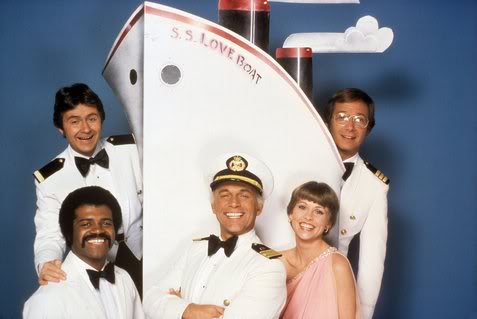
The first thing I think of is the crew of a ship, like the Love Boat. At the beginning of the 4th grade I went through this phase where I liked to draw yachts, like the 50 or 75 foot kind. The only trouble was I really only knew how to draw one kind, and that was a 3-leveled, very simple kind of boat. I’d see other kids at school, like Mike or Bobby, drawing boats so I would draw them also. Sometimes I drew them at home. I remember sitting down at the desk I had put in my closet (yes, I know that’s weird) and started drawing a boat. For the first time I guess, I realized that this was the same exact boat as I had been drawing all along. No difference except for sometimes I added a little stick man on the bow. I didn’t know how to draw any other kind of boat, so I just gave up and decided my boat-drawing days were over. I never have drawn very well. I used to hate art class. I dreaded having to turn in anything to Mrs. C. because I was sure she’d think I was some sort of imbecile for not being able to create depth or shadows or anything and that my people always looked like they had tree branches for arms and legs and long spindly fingers if I drew any. I was smart and did well in school. Generally I got all A’s. Drawing was beyond me, however. I guess the way I felt in art class was the way a lot of kids felt every day of every school year. They probably dreaded turning in their writing assignments for fear of being branded stupid and being laughed at, either in class or worse, in the teachers’ lounge. Of course we had no empathy for those kinds of kids in class. I’m sure I laughed at a few of them over the years, wondering how anyone could be so stupid. But I was wrong; we were all wrong. Now when I look at a wonderful drawing or painting, I wonder how anyone could be so talented as to be able to create something so beautiful and alive. How could they see it in their mind before it was ever formed on the paper or canvas? I guess we should never judge others. No, I know we should never judge others. We don’t know their story, where they came from, the problems they’ve had to face, the sorrow and hurt in their hearts.

And that’s the lesson I learned from writing about the word “crew”.

<

p style=”text-align:center;”>Image