For the Love of Ahab…

“Behold, I will bring disaster upon you. I will utterly burn you up, and will cut off from Ahab every male, bond or free, in Israel.” 1 Kings 21:21

“Have you seen how Ahab has humbled himself before me? Because he has humbled himself before me, I will not bring the disaster in his days; but in his son’s days I will bring the disaster upon his house.” 1 Kings 21:29

god-is-love
I have struggled a lot lately just trying to feel God’s love and forgiveness for me. Of course, I know that He loves all His children. I’ve always had difficulty, however, accepting this truth for myself. It’s like I think there’s a special set of rules for my life that negates all the Bible’s promises for me. It all holds true for everyone else – just not for me.

Recently I decided to start listening to the Bible while making my daily work commute. I’m quite happy I made that decision. Simply put, listening to someone read the Bible opens it up in a way that merely reading it cannot do, at least for me anyway. I’m able to allow myself to focus on the words, letting them wash over me and create wonderful pictures in my mind. The biblical scenes come to life.

I began by listening to 1 Kings. The tales of Israel’s kings — some good, some not so good — came to life. I could see the various rulers sitting on their grand thrones, pronouncing judgments daily on the people of their land.

Ahab is an example of a king who was evil in God’s eyes. He did not follow the example of David, who became a man after God’s own heart. Over and over 1 Kings tells us about Ahab’s evil doings, many of which were instigated and aided by his evil wife Jezebel.

We are told that Ahab did more evil in the sight of God than any of Israel’s other kings. He worshiped other gods, not only building a house for his god Baal, but also erecting an altar to him there. Other evil deeds included letting his greed to drive him to lay claim to a neighboring vineyard after Jezebel has the owner stoned to death.

God finally has enough of Ahab and pronounces judgment on him (1 Kings 21:17-24). In verse 21 God tells Ahab through Elijah that he “will bring disaster” on him, and will “utterly burn [him] up.” God says this judgment is because Ahab has provoked him to such an extent, causing Israel to sin. As for his evil wife, God says, “The dogs shall eat Jezebel within the walls of Jezreel” (23).

If God said those words to me I’d be shaking in my boots, crying, and begging God for mercy. I would hate to find myself in direct conflict with the all-powerful Creator of the universe. I’d imagine most people would have a similar reaction.

At heart Ahab was no different from the rest of us. He did evil — a lot of evil– but when God puts His foot down, Ahab repents. The once proud king tears his clothes, puts on sackcloth, and begins fasting. One translation says that Ahab went about “despondently”, while another says he acted “meekly”. Either way, Ahab shows God that he has had a change of heart.

God sees Ahab’s repentance and He intervenes, pointing out to Elijah how humble Ahab has become. God decides not to visit calamity on Ahab while he is alive, but says that He will instead wait until Ahab’s death before He destroys all the males in Ahab’s family.

When I heard these words being read, it was like a breath of fresh air. God loves us! This passage illustrates His never-ending love for His children. He is a God of justice, but He’s also a God of mercy. He’s always ready and willing to give second chances.

If He did it for a guy like Ahab, I know He can do it for me.

keepcalm

The Family Unit is Disappearing

In America, the traditional family as we know it is fading quickly. In talking about marriage, Chip Ingram, a well-known pastor and author, stated that less than 25% of the marriages today represent the the “typical” family of a husband and wife along with their children. He went on to say that 65% of couples who marry will have lived together before marriage (incidentally, living together before saying “I do” actually increases the already-high odds that the marriage will end in divorce). Also according to Ingram, 40% of Americans now believe that marriage is obsolete.

The majority of teens and 20-somethings today see little wrong with living together before marriage. My wife and I were having a conversation recently regarding how dating and marriage are viewed these days by these age groups. She said (based on her experiences with people these ages) that the goal now is not necessarily to grow up and get married, but instead to find somebody to live with for a while and then maybe find somebody else for a while, etc.

I’m reminded of a concept I read about in The Last Christian by David Gregory. I’ve been unable to get this out of my mind. In Gregory’s depiction of family life in the year 2088, couples don’t marry. Instead, they simply sign a contract with another person to be “life partners”. To clarify, that’s not life partners as in partners for life, but rather life partners as in partners with whom to live and possibly have children, usually for a 10 year contract. At the end of this time, they can either renew the contract for another 10 years or else part ways and find new life partners.

The following morning after the conversation with my wife, I went to my favorite hair shop for a haircut. The owner/stylist and I were talking about how difficult marriage and relationships can be. I asked her if she’d ever been married. “Once,” she replied. “And that’s all for me.” She went on to say how she didn’t mind relationships but she didn’t want the hassle of answering to anybody again.

Her next statement nearly floored me. “You know, it wouldn’t be so bad if the marriage was for 5 years or something, then you could evaluate it and see if you wanted to go on.” Interestingly, she’s 52 — not exactly a young adult.

I believe the reason there is currently such an overwhelming amount of sympathy for the homosexual agenda among young heterosexuals is that the Christian right represents an enemy not just to homosexuals touting gay “marriage”, but also to a large number of heterosexuals who are living together in sexual sin. I don’t believe that in general heterosexuals are necessarily that sympathetic toward the homosexual cause for the sake of the cause itself. However, Christians represent a threat to their chosen lifestyle as well. If Christians, or anyone with a moral voice, are allowed to say that homosexuality is wrong, then what’s to stop them from saying that heterosexuals living together is also wrong?

We have generations of kids today growing up in split families, perhaps with one or both parents living with a partner outside of marriage. Add to this the overwhelming dominance of sex and rebellion in the media. Prime time sitcoms and reality shows, not to mention movies and the gigantic popular music industry, all espouse a life of freedom from any sort of sexual morality whatsoever. Pick just about any TV show and you’ll find unmarried characters randomly having sex and/or living together.

Yes, I know this sounds very preachy and old-fashioned. I’m not pointing fingers at any one group. All of us sin. However, in my heart I believe that this is why America is how it is today. For most kids and young adults, they are not getting any sort of message whatsoever about sexual restraint. It’s get what you what, how you want it, with whom you want it, whenever you want it.

Our schools aren’t helping the situation either. I read recently where a school district in Oregon recently approved making condoms available to 6th graders! All they have to do is ask for them. Crazy.

The traditional American family is already a minority; it may become virtually extinct if our society doesn’t change. Is it too late for America? For the world? Only God knows these answers. I don’t know, but my gut feeling is that things are only going to get worse from here.

Four

Nothing seemed out of the ordinary when I hugged him and told him goodbye. He probably told me to be careful on my way back home, but I don’t remember. I climbed into my car and pulled onto the highway, making a mental break from my brother and preparing for my long drive home. My mind was filled with all the events of the weekend — seeing my old classmates at the reunion, driving past the the house where I grew up and seeing the inside warmly lit, visiting with my extended family. It would take me quite some time to process the deluge of emotions swirling around inside my head from all that had happened that weekend. These emotions were so intense that my relationship with my last surviving brother was not of much importance at that moment. I didn’t know it then, but we would let years pass by without so much as a word to each other. In fact, today marks four years exactly since I last saw or spoke with my brother.

I had felt it creeping up on me. These four years have not elapsed without weekly and almost daily realizations that more and more time had passed since our last conversation. For the first year or two, each time I would think about it I’d say to myself something like, Yes, I really should call him. We are flesh and blood after all. We shouldn’t go on like this without having at least some kind of relationship. I would often picture myself several years down the road, stressing over finally calling him after such a long time. I never wanted to become one of those middle-aged adults you see on TV who reestablishes contact with a brother or sister after decades of separation.

family-of-originHowever, for the last year or two, I haven’t cared so much. If there’s one thing I’ve learned as an  adult, it’s that time has a way of softening painful emotions. The importance of difficult situations and their attending emotions seems to diminish ever so slightly with each passing day, week, and month. Now when thinking about the the whole situation, I have pretty much resolved myself to the fact that I no longer have any siblings (my sister is a whole other story), a condition that I anticipate will in all likelihood remain the same for the rest of my life.


Of course I feel some guilt for this situation. I could easily have picked up the phone and called him at some point over that last 48 months. I never did, however. I’d say this is mostly because the thought that he never bothered to call me either showed exactly how much worth he had placed on the relationship. Why should I bother to go out of my way when it is quite apparent that he has no desire to maintain a relationship with me? I would very conveniently put my apathy for him out of my mind.

I regret not maintaining a relationship with him. The concept of a strong family unit was always important in my family of origin. My mother used to say, “Family is all you’ve got. Girlfriends and boyfriends will come and go, but you’ll always have your family.” Also, I remember the day she told me that biologically I’m closer to my siblings than to either of my parents. She explained that we siblings all came from the same two parents, making us biologically as close as possible.  But for that same reason (that we’re a product of both parents), we’re not as biologically close to either of our parents individually as we are to our siblings.

As for my father, his way of encouraging tight family connections was to tell us when we were going out for the evening, “Don’t do anything to disgrace the family.” There is no telling how many times I heard that appeal to my siblings when I was younger, and then to me personally when I reached my teen years and began going out regularly. My guilt over not calling my brother makes me feel like I’ve let the family down in some way, like maybe I’d still have a brother to talk to if only I’d called him at some point.

Perhaps, after all these years, the time is right to reach out to him. I can’t help but wonder about his spiritual state. If he died today, would I have any assurance that he’d experience eternity with God instead of suffering and eternal isolation from Him? No, I don’t.

I guess I know what I need to do.

Random musings…

In recent weeks, God has taught me in two distinct areas. Over the course of a day or two I heard three different sermons/teachings on 1 Timothy 6, about how contentment is great gain. I didn’t seek out any of these teachings knowing that they were on this topic. The other topic was on Alfred Nobel. As the story goes, his obituary was mistakenly printed in the newspaper one morning, and upon seeing himself labeled as the “Merchant of Death”, he became so disturbed that he used his fortune to create the Nobel Prizes. Once again, over the course of two or three days, I heard or read three different teachings on Nobel. Prior to this, I was not familiar with the story of his obituary or how the Nobel Prizes came to be. After learning about his efforts to create a better legacy for himself, I’ve given a lot of thought to my own legacy and how I want to be remembered after I’m gone.

https://i0.wp.com/www.clker.com/cliparts/d/a/d/a/1237916330642196052IceHand_Ornamental_Divider_Englische_Linie.svg.thumb.png

As I was listening to an old song by Kitaro, the Japanese musician, I was flooded with memories and emotions from back in 1986 when I first heard this song. I had been introduced to his music at a summer program that lasted for several weeks. How in the world did I evolve from being a scared 17-year-old kid to a middle-aged man with two teens of his own? The enormous differences between my life then and my life now are amazing. I suppose there is only one answer for how this happened — one day at a time.

https://i0.wp.com/www.clker.com/cliparts/d/a/d/a/1237916330642196052IceHand_Ornamental_Divider_Englische_Linie.svg.thumb.png

Lately as I’ve really tried to rely on God for everything (my daily sustenance), I’ve viewed my dependence on Him sort of like being in prison — waiting blindly for the door to open and some food or a package to slide through. I’m sad to admit this, to myself as well as to others. It’s hard feeling like you’re not in control, however. I pray that I can shake this feeling and begin to see my relationship with God as it should be.

https://i0.wp.com/www.clker.com/cliparts/d/a/d/a/1237916330642196052IceHand_Ornamental_Divider_Englische_Linie.svg.thumb.png

As I was taking a shower one recent morning, I realized after a couple of minutes that I had already had three very different songs running through my head — the classic hymn “Shall We Gather at the River?”, Skid Row’s “Youth Gone Wild”, and Andy Gibb’s “I Just Want to Be Your Everything”. I have no idea why my brain decided to play these three particular songs that morning.

https://i0.wp.com/www.clker.com/cliparts/d/a/d/a/1237916330642196052IceHand_Ornamental_Divider_Englische_Linie.svg.thumb.png

I’m always happy when pulling out of the driveway to leave for an overnight trip. I finally realized why. The road gives hope — you have something to look forward to, a destination that will give you a break from the daily monotony of ordinary life. This fact may be obvious to others, but for me I just realized it.

https://i0.wp.com/www.clker.com/cliparts/d/a/d/a/1237916330642196052IceHand_Ornamental_Divider_Englische_Linie.svg.thumb.png

I’ve always been fascinated how conversations will evolve, how one topic leads to another, then another, etc. Recently I was sitting around talking with a mixed group of people. An older lady was remarking how her husband used to write her love notes when he was overseas in World War II. A younger lady then told how when she and her husband were first dating, he wrote her love notes on blue toilet paper. Then the thought struck a couple of us that you can’t find colored toilet paper on the shelves anymore. A teenage girl googled the subject, finding one result that said the dyes in colored toilet paper were banned several years ago due to a suspected link to cancer found in lab animals. The conversation then took a turn toward discussing the primate research lab at the local university. One of the women works in the medical center of this university, so the conversation drifted onto the effect that Obamacare has had on their industry and healthcare in general. So, our group’s conversation went from WWII love notes to the reduced quality of healthcare in a matter of minutes. And we were scarcely even aware.


God in a Hazy Shade of Winter

Recently, as I was sitting at a traffic light and staring up at billboard, the thought hit me that since God is eternal, and that since man has only been on the earth for a few thousand years (I know this point is debatable), the whole span of human existence is but a mere blip for God.

I wondered then, “What did God do for all the ages leading up to our existence?” Does He have a much bigger role that He is filling, rather than just “Creator of Humans”? There is a whole universe out there, after all. And the vast majority of it has to do with us tiny, weak humans.

I have always thought of humans and the earth as being God’s big success story, that His big accomplishment was us. However, we are really only a minute part of what God has done. It’s kind of like how a small child imagines that he is his parents’ whole life. He isn’t able to fathom them ever having a life before him — as though they were born parents.

One thing I have wondered about for years is what Satan was doing after He and his cohorts were kicked out of Heaven, but before God created man. Satan is called the “god of this world” (2 Cor. 4:4), but what was happening before there really was a world (earth) and people to tempt? Why did God even allow Satan to enter the Garden of Eden in the first place? I think I’m getting ahead of myself.

The more I’ve thought about all these questions, the more I realize that I’m asking the wrong questions, or maybe it’s just that I’m making inaccurate assumptions about God.

God isn’t constrained to time like we are. For example, we often think in terms of humans having been around for a specific length of time, say 6000 years (again, debatable). Furthermore, we understand that God existed before humans, and will, of course, exist for all eternity with His believers in the New Jerusalem, after earth as we know it is gone, and He has created a new heaven and a new earth (Rev. 21:1-2). Thinking about time in a linear fashion is the only way we know to do so.

I believe that God is also able to do the same thing — view time as a long line stretching to eternity in both directions, both past and future. However, I believe that for Him there really is no such thing as time. Everything past, present, future exists all at once for Him. He sees it all, all the time. He’s God. He’s big. He can do that.

Therefore, to ponder what God was doing before He created us, is really basing the question on faulty assumptions. In Exodus 3:14, God calls himself, “I AM”. God is, was, and will be. There has never been a time, nor will there ever be a time, when God does not exist.

In fact, even framing the last sentence the way I did is inaccurate. God came before time, not the other way around. It would be impossible for there ever to be a time when God did not exist, because He created time. God exists without time.

This brings me back to my original question then, “What did God do for all the ages leading up to our existence?”. I believe the only way to answer it is by concluding that for God humans have never not existed. We’re no less real and alive to Him today than say, a billion human years ago.

A different kind of post…

Image

Today’s post is going to be a little different. I’m going to free write about a random word, editing very little of the final product. I decided to use the 10th word in the 10th row from today’s article on the Wikipedia homepage. It happens to be the word “crew” (unless I counted wrong).

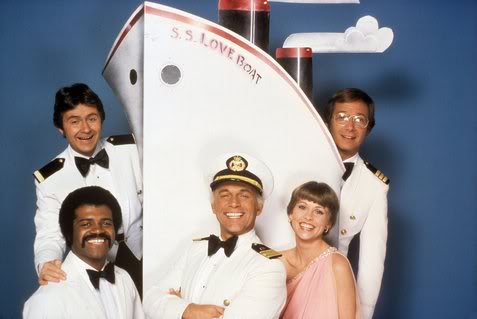
The first thing I think of is the crew of a ship, like the Love Boat. At the beginning of the 4th grade I went through this phase where I liked to draw yachts, like the 50 or 75 foot kind. The only trouble was I really only knew how to draw one kind, and that was a 3-leveled, very simple kind of boat. I’d see other kids at school, like Mike or Bobby, drawing boats so I would draw them also. Sometimes I drew them at home. I remember sitting down at the desk I had put in my closet (yes, I know that’s weird) and started drawing a boat. For the first time I guess, I realized that this was the same exact boat as I had been drawing all along. No difference except for sometimes I added a little stick man on the bow. I didn’t know how to draw any other kind of boat, so I just gave up and decided my boat-drawing days were over. I never have drawn very well. I used to hate art class. I dreaded having to turn in anything to Mrs. C. because I was sure she’d think I was some sort of imbecile for not being able to create depth or shadows or anything and that my people always looked like they had tree branches for arms and legs and long spindly fingers if I drew any. I was smart and did well in school. Generally I got all A’s. Drawing was beyond me, however. I guess the way I felt in art class was the way a lot of kids felt every day of every school year. They probably dreaded turning in their writing assignments for fear of being branded stupid and being laughed at, either in class or worse, in the teachers’ lounge. Of course we had no empathy for those kinds of kids in class. I’m sure I laughed at a few of them over the years, wondering how anyone could be so stupid. But I was wrong; we were all wrong. Now when I look at a wonderful drawing or painting, I wonder how anyone could be so talented as to be able to create something so beautiful and alive. How could they see it in their mind before it was ever formed on the paper or canvas? I guess we should never judge others. No, I know we should never judge others. We don’t know their story, where they came from, the problems they’ve had to face, the sorrow and hurt in their hearts.

And that’s the lesson I learned from writing about the word “crew”.

<

p style=”text-align:center;”>Image

Thinking about Genesis…

Image

As I sat in the Easter service this past Sunday contemplating the miracle of Jesus’ resurrection, I had a thought. What if God gave us the creation account as the first story in the Bible so as to set the bar for the entire rest of His narrative? It makes sense to me.

If we know nothing about the Bible and the first thing we do is pick it up and start reading at the beginning with Genesis — BAM! it hits us right in the face.

You mean God created the whole universe from nothing? He just spoke it — and the world was formed?

The Genesis account is no doubt difficult for human minds to grasp, especially our western, educated, logical minds.

However, if we can wrap our heads around what the Bible tells us regarding the world’s creation, or even just suspend trying to understand it at all and just accept it on faith, then we allow ourselves the possibility to believe the rest of the miracles in the Bible.

Surely, if we accept that an eternal, timeless God created the world from nothing just by speaking what He wanted, then surely we can go on to believe that He can part the Red Sea and allow His people to escape to freedom.

Surely if we we’re OK with the fact that God created the first woman from a rib taken from the first man, the we can accept something small such as His son turning water into wine.

Healing leprosy? That’s nothing compared to populating the entire animal kingdom at will and then saving it by sending a male and female of each kind to seek refuge from a worldwide flood aboard a huge ark that, incidentally, took 120 years to build.

Of course, there is no way to prove my theory, but maybe if God has a Q&A session in Heaven, I’ll get an answer.


Image

Jesus is Just Alright, or Which Came First — The Easter Bunny or The Black List?

undercoveragentAt the very end of “The Black List” recently, Liz lays her head on Red’s shoulder. Acting as a father figure, he holds her and gently places a kiss on the back of her head. She cries from the unimaginable facts she has recently discovered about her husband.

Red has just completed building a music box for her. It plays the same song as the one her father gave her when she was a little girl. Liz realizes that just as her father played it for her when she needed someone there for her, Red has made it so that it would be ready for her when she finally reaches the point where she would have to face the facts about her husband.

It was touching. At that moment she was completely cared for, completely protected. Red knew what Liz needed and he had prepared for it in anticipation of what was to happen.

Out of nowhere I realized that is exactly what I wanted:  to be a little boy again, held in the arms of my mother when all the world seemed against me. When all I wanted to do was ball my eyes out, she would hold me, stroke my hair, and tell me everything was going to be OK. I didn’t have to be strong at that moment. She was. My father was. They provided for me and protected me. It was a strong, solid safety net — one that kept me from certain tragedy (or so it seemed to my young mind).

I’m beginning to see how God is that safety net for us, His children. I’ve known for a long time that He wants to be our Comforter, our Protector, but it’s taken me an even longer time to turn that head knowledge into heart knowledge — to accept the fact that He really is there, no matter what. He longs to have us rest in Him: “You keep him in perfect peace whose mind is stayed on you, because he trusts in you” (Isaiah 26:3).

I recently heard Timothy Keller of Redeemer Presbyterian Church in Manhattan, teaching on Jesus’ ascension. One of the verses he references is John 10:17. Here, Mary Magdalene has just discovered that Jesus has risen from the dead. He says to Mary, “‘Do not cling to me, for I have not yet ascended to the Father; but go to my brothers and say to them, ‘I am ascending to my Father and your Father, to my God and your God.’”

As Keller explains, Jesus tells Mary not to hold on to Him, that He must go. The ascension was a good thing, because only by ascending is Jesus able to sit in His place of honor, at the right hand of the Father. After His resurrection, but before His ascension, he walks the earth just as any ordinary man might do. By ascending to Heaven, however, He is able to assume the role He was always intended to hold.

Because Jesus is in His seat of power at the right hand of the the Father, He watches over us continually, interceding for us, no matter what.

Certainly, Jesus had power when He was in human form. After all, He was still King of Kings. However, all the final pieces fell into place when He assumed His intended role.

It’s been a difficult journey for me, trying to grasp how much God truly loves His children. Even though the analogies we might make through stories like the ones on “The Black List” can spur us toward thinking about God’s vast love for us, these comparisons can never begin to illustrate all that He has in store for us. “But, as it is written, ‘What no eye has seen, nor ear heard, nor the heart of man imagined, what God has prepared for those who love him’” (1 Corinthians 2:9).

My belief is that we’ll never really under God’s immense love this side of Heaven. We simply have to trust in Jesus, patiently waiting until we’re able to worship Him in person and experience His full glory.

bunny-cross

Expletive (NOT) Deleted

This topic is difficult to write about, as it paints me in a negative light. I believe, however, that this is something that needs to be said.

Ever since I accepted Christ as my Savior when I was 15, I have wavered back and forth in my faith. I have gone through many different periods when I was close to God, seeking His will daily in my life. On the other hand, there have also been many times when I have rebelled from God, committing sins and living a lifestyle that I knew deep down I shouldn’t be.

If I’m at a point in my life when I’m closer to God and trying to live the way I believe He wants me to, Imagethen the harshest words I might use are “heck” or “dang”. During these times, it’s natural for me to react more softly to daily trials and tribulations. It’s something I don’t really even have to think about, but instead comes as a result of regular bible reading and prayer. “For out of the abundance of the heart the mouth speaks” (Matt. 12:34b).

On the flipside of this, however, during times of rebellion I do not hesitate to take God’s name in vain. When I get angry or bitter about something that isn’t going my way, I tend to put His name in front of “d****t”, making this expletive even harsher and more cutting.

At the moment that this pair of words comes out of my mouth, it is as if I am saying to God, “I really mean what I’m saying here. I’m not kidding around.” For instance, suppose I’ve had a particularly bad day and then on top of it all my favorite shirt rips when I’m putting it on. After spewing out those two words I might grit my teeth and yell something like, “I have absolutely had it with this day!” At that moment I may as well be yelling to Heaven, glaring with my fist raised to God, telling Him that it all needs to stop now because I’m not going to take it anymore! Or else!

Or else what? one would ask. Or else nothing actually. What am I really supposed to do if I’m mad at God. Of course, there’s nothing I can do except sit and pout.

In the moment, my childish nature is completely ruling me, yet all my anger and rebellion seems effective to me.

I realized several years ago that I could use my response to stressful situations as a kind of barometer of my spiritual condition.

If something unnerving happens in my day, and I simply smile and shake my head, then I realize that I’m on track spiritually speaking. Look back over recent days and weeks, I’ll be able to see that I’ve made strong efforts to live for God. On the other hand, I know my spiritual life is in the gutter if “GD” comes out of my mouth.

I have found this barometer most helpful to my spiritual life in the area of comparison. I can either stop and think to myself, Boy, I’ve come a long way in the last six months. I remember when I use to get all bent out of shape being stuck in traffic. Or I can think, It’s sad to realize how much my spiritual life has deteriorated in the last few weeks. I really need to get back on track with God. In this way, the barometer either serves as kudos for myself, or as a convicting reminder.

ImageMusic has played a huge role in my life, ever since I was about five years old. Over the years I’ve often written about its effect on me.

Along with the profanities (or lack thereof) that come out of my mouth, I discovered several years ago that the type of music I’m listening to at any given time is also a kind of barometer for my spiritual state.

For example, if I’m content listening to lighter music such as KLOVE, and I feel “nourished” by it, then there’s a good chance that in recent days I’ve actively been trying to please God and not rebel against him.

On the other hand, if I try to listen to KLOVE, but all it really does it irritate me (because who is that happy and content anyway to be able to sing in such a “smily” voice?), then it’s probably something harder, edgier that I really crave — maybe pop or even hard rock or metal. If I pause long enough to reflect on my situation, I’ll realize that I’m most likely not at a point at that moment where I care enough to live my life for God.

There are many nuances to this music barometer. I could go into great detail describing scenarios for the different types of music I listen to. It doesn’t really matter, though. The point is that the music I’m most comfortable with at any given moment reflects my spiritual state.

Yes, of course, I realize that the reverse is also true. What I allow into my ears (and consequently my mind) has a huge effect on my attitude and my desire to live for God. “Garbage in, garbage out,” as the experts tell us. Here I must assert that often I will choose to listen to something “better” (read less rebellious and more spiritual) if I realize that my walk with God is suffering.

Referencing these indicators is not meant to belittle my faith in God. As human beings, most of us value our appearance. We look in a mirror to give us an idea of what we look like to other people. Over the years I’ve realized that because I’m thankful to God for His salvation and I want to worship Him, I can use these behavioral barometers to get a quick check of my spiritual condition — kind of like taking a quick glance in the mirror to see if I have anything on my face.

Something to think about…

Image

I’ve always been troubled by the idea that two equally God-fearing, God-worshipping individuals could have such radically different opinions theologically, politically, and socially. For this to be possible, it seems almost as though God’s system is faulty. The truth should be clear and easy to discern.

Could it be that God designed things this way? Perhaps He wants it to be easy to grasp the fundamentals of the Christian faith (Jesus is Lord, He was crucified for our sins, and then was resurrected). This possibility leaves other, outlying details subject to interpretation, based on what kind of and how much importance each of us places on individual tenets of the faith.

If this is true, then we, as believers in Christ and earnest seekers of truth, never give up our quest for knowledge. We never quit thinking, never quit debating each other, never quit refining our own beliefs, never quit being sharpened by our fellow believers (Proverbs 27:17).

For example, I may place great emphasis on complete and total surrender of everything in my life to God, keeping for myself only enough material goods for a meager sustenance and lifestyle, allowing me to give generously to others and lift them up. Another person may cherish the freedom we have in Christ to buy, sell, and turn a profit,  thus creating a more lavish lifestyle for himself.

One individual may emphasize the social aspects of the gospel, crusading for justice and equality for all mankind. Another individual’s mantra may be based on a capitalistic interpretation of God’s word — “If anyone is not willing to work, let him not eat” (2 Thessalonians 3:10b).

Is any one of these approaches completely right or wrong, or are they all a part of the greater whole of God’s word and will?

I don’t have the answer to this question. I believe, however, that having such differing opinions is valuable to us as believers in Christ. As we keep searching for truth in the Scriptures, may God’s word become sharper and clearer to us, as we become more and more unified in our faith in Jesus.


Image