You Can’t Out-Sin God’s Forgiveness

If we confess our sins, he is faithful and just to forgive us our sins and to cleanse us from all unrighteousness.

1 John 1:9

As believers in Christ, we’ll never be outside of God’s forgiveness. 

Think about that for a minute…

There’s nothing we can do that God will not forgive us for—so long as we’ve trusted Jesus for our salvation.

That’s the key. Without Jesus, there is no forgiveness. 

Instead, there’s a great gulf between God and us because no one is able to completely keep all tenets of the law that God gave to His people. 

That’s the reason for Jesus. God the Father knew that man doesn’t have the ability to follow the law completely, keeping even the smallest detail without sinning. As we’re told in James 2:10:

For whoever keeps the whole law but fails in one point has become guilty of all of it.

It doesn’t matter if we tell a so-called “white lie,” or if we’ve killed someone, guilty is guilty. 

However, the good news is that Jesus’ death and resurrection puts us right with God. God, being eternally just and good, couldn’t go back on the law He created, so He sent Jesus to fulfill the law. 

Through His crucifixion and subsequent rise from the grave, Jesus became the first fruits of all of us who believe in Him. All we have to do is believe in the lordship of Jesus and that He died and rose from the grave to pay for our sins. 

It’s that simple. Our works won’t get us into Heaven. Instead, our faith does. 

So, going back to forgiveness…once we become followers of Jesus, we have God’s complete forgiveness no matter how badly we mess up. All we have to do is repent and confess our sins and we can be confident that we have God’s forgiveness.

How great is that!

So, if you haven’t trusted your eternal destiny to Jesus yet, that’s the first thing you need to do. Your life will never be the same afterward. Take a moment now to invite Jesus into your heart.

Then you can rest easy, knowing that there’s nothing standing between you and fellowship with God.

Of course, as followers of Christ, we should want to avoid sin. However, being human, we will invariably fall short. When we do, thanks to Jesus we can know with confidence that we have God’s forgiveness. 

That should give each of us peace of mind!

Trust God and Be Happy

As if we didn’t already have enough reasons to trust God with our lives, could it also turn out that trusting in God will bring us happiness?

Yes, that is exactly the case. Our heavenly Father wants us to rely completely on him, so much so that He makes it that if we do trust him completely, our lives will be better for it. 

Take a look at Proverbs 16:20b in the ESV (English Standard Version):

Blessed is he who trusts in the Lord.

The word that is translated “blessed” in this verse can also be translated as “happy.” Some translations, including the CSB (Christian Standard Bible) actually render the verse that way. 

God is telling us that we will be happier and more joyful if we’ll just trust in Him and His guidance. Whenever our eyes stray away from God and onto our own way of thinking, we’ll get into trouble. It’s far better to trust in the Lord for everything, plus doing so will bring more joy into our lives.

In Psalm 34:8, we’re told:

Oh, taste and see that the Lord is good! Blessed is the man who takes refuge in him!

Once again, the word translated as “blessed” can also mean “happy.” Go ahead and take refuge in the Lord. Make Him your mighty fortress when the challenges of life come your way, because they surely will. 

In fact, we should make it a priority to rejoice in our trials, as we’re commanded in James 1:2-3:

Count it all joy, my brothers, when you meet trials of various kinds, for you know that the testing of your faith produces steadfastness.

Let’s get to the point where we welcome struggles and challenges every day because we know they’ll increase our faith in God.

I, for one, will admit that this area has been a huge problem for me. When something goes wrong, often my first inclination is to blame God, and even get mad at Him for it.

After all, I’m a “good Christian,” right? I shouldn’t have to deal with a broken-down car or plumbing problems at 2 a.m., should I?

God never promises that following Jesus would eliminate all our problems and frustrations. What He does promise is that if we’ll take refuge in Him when faced with challenges, that we can have joy and that our faith will grow.

Furthermore, we can thrive during rough times. Just read Jeremiah 17:7-8:

Blessed is the man who trusts in the Lord, whose trust is the Lord. He is like a tree planted by water, that sends out its roots by the stream…and is not anxious in the year of drought.

Trusting in God wholeheartedly not only can bring us happiness and joy, it is also a potent antidote for anxiety. And in these trying times of global pandemic, chaos, and political upheaval, it doesn’t get much better than that. 

God wants and longs for what’s best for you. Take Him at His word—begin a new pattern of trusting Him with the entirety of your life, even the smallest of details. 

When you turn everything over to Him, He’ll shoulder the burden (1 Peter 5:7) and you can rest in the joy of the Lord.

The Essence of the Gospel

OK, here’s your tough question for the day…

What is the true essence of the Gospel? What is it all about anyway?

This image has an empty alt attribute; its file name is felix-koutchinski-qarm_x5hwyi-unsplash.jpg

Perhaps the Good News is about forgiveness. If we have placed our faith in Christ, then we know that we have forgiveness for our sins. Romans 5:8 tells us, “But God demonstrates his own love for us in this: While we were still sinners, Christ died for us.” 

His death and resurrection atoned for our sin (a fancy way of saying that He paid the price for our sin).

Or, we could say that John 15:12 sums up the Gospel: “This is my commandment, that you love one another as I have loved you.”

Surely, if we don’t have love, then we don’t truly have the Spirit of Christ living in us. 

We are even told in Matthew 22:37-40 that “You shall love the Lord your God with all your heart and with all your soul and with all your mind. This is the great and first commandment. And a second is like it: You shall love your neighbor as yourself. On these two commandments depend all the Law and the Prophets.”

So, love is definitely a big part of the Gospel.

But so is salvation. We learn in Romans 10:9 that, “If you declare with your mouth, ‘Jesus is Lord,’ and believe in your heart that God raised him from the dead, you will be saved.”

We have to conclude, therefore, that the Gospel is about salvation.

However, that’s not all. In arguably one of the most famous and often-quoted verses in the Bible, we are told that, “For God so loved the world

This image has an empty alt attribute; its file name is davide-cantelli-h3gijctw__w-unsplash.jpg

that he gave his one and only Son, that whoever believes in him shall not perish but have eternal life” (John 3:16).

Eternal life is a key part of the Good News for sure.

So, what then is the essence of the Gospel?

Simply put, it’s Jesus. He is the “pioneer and perfecter of faith,” as Hebrews 12:2 is rendered in the NIV. The NKJV calls him the “author and finisher of our faith.”

So, yes, the Gospel is about all those other things. However, it is undeniably, unmistakably about Jesus our Savior, the One sent by the Father to make us right in His eyes.

All we have to do is believe

Trust God No Matter What

We all have times in our lives when our faith falters and we begin to doubt God.

We wonder if He’ll be true to His word and follow through with His promises to bless, help, and protect us. It’s natural to find ourselves doubting from time to time because, after all, we’re only human and far from perfect. 

What is the best way to get back on track to the point where we’re relying on God again? No doubt you’ve been in tough situations in your life before—whether it was with money, relationships, your career, your health, or something else. 

Did you pray to God and ask Him for help during these times? Most likely you did. What was the outcome?

Maybe He didn’t answer your prayers in just the way you thought He should; however, He brought you through those trying times in the way that was best for you in the long run (Rom. 8:28).

So, if you’re currently faced with a seemingly insurmountable challenge in your life, the key is to think back on those other tough times and remember how God brought you through them. 

No matter how those other challenges turned out in the physical realm, God was with you every step of the way. He never left your side because He wants what’s best for you and is always working things out on your behalf. 

You are who you are today because of the challenges and circumstances you’ve had to endure in your life up to this point. 

The situation you’re in right now will be just one more example of how God uses our daily lives with all its challenges and trials to mold us into the people He wants us to be. 

But we have to trust Him. When things seem their darkest, recall all the good things He has given you in your life. Spend a few minutes just meditating on ways He has blessed you. 

It could be that He has given you a wonderful and loving family, an enjoyable job you look forward to each day, financial blessings such as an unexpected windfall, or just the ability to take joy in the midst of chronic physical pain each day.

God loves you and wants you to lean on Him. Do it. Trust Him with everything in your life—your time, money, energy, and resources. He WILL come through for you. 

However, don’t expect His help and blessings to look like you think they should, because they often won’t. He’ll work out your situation in His own time frame and in His own way. But you’ll come out on the other side better for it.

Abraham’s Faith Vs. Our Faith

“Now the Lord said to Abram, ‘Go from your country and your kindred and your father’s house to the land that I will show you. And I will make of you a great nation, and I will bless you and make your name great, so that you will be a blessing.’”

Gen. 12:1-2

The above verses are explicit instructions from God to Abram, whose name was later changed to Abraham. It would be difficult for Abram to misunderstand what God was saying to him. 

Abram is to “go,” then God will “show,” “make,” “bless,” and “make” again, then finally Abram will simply “be.”

Upon analyzing these two verses, all I can say is “Wow.” 

It would be nice to have that kind of crystal clear instruction from God. There would be no confusion or ambiguity. You’d know exactly what was expected of you and precisely what God would then do.

However, God rarely speaks to us in this way. Perhaps the reason why lies in the fact that today, as followers of Jesus, we have the Holy Spirit who speaks to us in a still, small voice. We have to be especially tuned into Him to hear and understand His subtle direction.

If we compare our situation today with that of Abram’s from thousands of years ago, what can we take away from it?

As I was lying in bed trying to fall asleep last night, I began thinking about the subject of faith. Specifically, I thought about the faith of Abram, given the specific instructions he was entrusted with by God, as compared to our faith today when we are so often unsure of what God’s next steps are for us. 

Are these the same types of faith? Is it fair to compare Abram’s faith with ours? He had clear, audible communication from God. All he had to do was follow His directions and he was guaranteed to be blessed.

We know that Abram is credited with having great faith.

 “By faith Abraham obeyed when he was called to go out to a place that he was to receive as an inheritance. And he went out, not knowing where he was going. By faith he went to live in the land of promise, as in a foreign land”

Heb. 11:8-9a

Selfishly I suppose, I can’t help but think to myself that it doesn’t take nearly as much faith to follow the explicit directions Abram was given, compared to the kind of faith it requires to move in a direction that you’re just praying and hoping is what God wants from you.

Why is Abraham specifically mentioned as a biblical character who displayed such great faith? On the surface, it seems all he really did was just follow orders. I could do that (at least I think I could).

Maybe it was harder than it first appears for Abram to leave his home and go to a foreign land. I know it’s not something I’d necessarily want to do. Yet, he followed God’s leading and through him the nation of Israel was formed. 

Maybe God had to be explicit with Abram because so much was on the line. If Abram had been uncertain about his calling, his faith might have faltered and the course of history would have taken a drastically different turn.

I believe that God knew what He was doing when He gave Abram those instructions. And I believe He knows what He’s doing when He whispers to us softly in the midst of our busy lives.

It’s just up to us to keep our ears close to Him.

God is in Your Nose

Do you know what nasal turbinates are? Like me, you’ve probably never heard of them unless you work in the medical field.

However, these structures in your nasal passages play big roles. According to verywellhealth.com, turbinates are “shell-shaped networks of bones, vessels, and tissue within the nasal passageways. These structures are responsible for warming, humidifying, and filtering the air we breathe.”

joseph-greve-539294-unsplash

The turbinates’ action is actually fairly complex. Among other duties, they help us smell, drain our sinuses, determine our voice tone, and regulate the nasal cycle—which involves opening and shrinking the nasal passages every one to seven hours (for exact reasons that aren’t yet fully understood).

That covers a lot of territory. So, if it weren’t for your nasal turbinates, when you take an early morning jog on a brisk January morning, the chill air you breathe in would go straight to your lungs without being filtered or warmed at all. Your lungs wouldn’t like that and neither would you.

1237916330642196052IceHand_Ornamental_Divider_Englische_Linie.svg.med

Thinking about all this makes me wonder…Wouldn’t it be a whole lot simpler if we didn’t have to rely on turbinates? I mean, why didn’t God—in His infinite wisdom—design our bodies without such a complex setup for air filtering and regulation? He has the capacity to do so, right?

I don’t know the answer this question, and I suspect you don’t either. However, I believe we can learn something about the nature of God from this discussion.

Yes, God can do whatever He wants. What He obviously wanted when He designed the human body with all of its intricacy was for it NOT to be a simple system. He chose for our bodies to depend on nasal turbinates, as well as a heart and an even more complex brain and nervous system.

What this means to me is that, when it comes to other aspects of our lives—our relationships, our careers, our other personal challenges—we shouldn’t expect quick and easy results.

Lasting change takes time. It almost never comes through a miracle and almost always comes through natural processes. I believe this is one of the things He was trying to teach us when he designed the human body.

That’s the way God works. He created us as complex human beings with wonderful, intricate bodies. The same is true in the rest of the natural, created world.

aaron-burden-361231-unsplashLook around at the trees of the forest, the myriad sea creatures, all the species of insects and other animals—all in rich and diverse ecosystems that maintain delicate balances.

That doesn’t mean God isn’t involved in the day-to-day. He knows all and is in charge of all:

“Aren’t two sparrows sold for a penny? Yet not one of them falls to the ground without your Father’s consent. But even the hairs of your head have all been counted” (Matt. 10:29-30).

There is nothing that happens on this earth that he doesn’t bypass His authority. We might not always like what happens to us, but we can rest assured that God is in ultimate control of everything.

I’ve learned that I often won’t understand the reasons why my life takes a certain course. I may not like that I have to trudge through mud and snow and gunk to get to the other side because I’d rather that God just pick me up and place me where He wants me. I know He has the power to do that and it’s frustrating to think He won’t do it.

But that’s where faith comes in. “Trust in the Lord with all your heart, and do not lean on your own understanding. In all your ways acknowledge him, and he will make straight your paths” (Prov. 3:5-6).

In the end, that’s all we can do.

The Lasting Way to Deal With Life’s Difficulties

Maybe you’re like me and really dislike dealing with the many struggles of everyday life.

No matter how tired I become of them, these struggles continue relentlessly, however.

I wish life were simpler and easier to take. So many mornings I force myself to get out of bed, only to realize I have to face another day of drudgery. I stumble into the shower to freshen up, hopeful I can get energized enough to face the day. Surely there’s more to life than this, isn’t there?

You’ve probably been there yourself. Just wondered why you’re here on this earth and what the meaning of it all is.

I’ve felt stuck, trapped, useless, like there’s no point in going on. I gotten mad at life and mad at God for putting me here on this earth with no real purpose in doing so. Or maybe I do have a purpose — just to suffer until one day I don’t wake up or until Jesus comes back.

Not a very pretty picture, is it? Have you ever felt this way? Maybe 100 times? 1000 times?

So, what’s the answer?

There are many approaches you could take if you’re at this kind of place in your life — philosophical, practical, positive, negative, Christian, atheistic.

The best way I could advise anyone (myself included) on how to deal with these sometimes overwhelming thoughts is simply to trust.

Trust in the Lord with all your heart, and do not lean on your own understanding (Prov. 3:5).

Trust that there’s a God. That He’s big and He loves you. That He’s got your back and He wants the best for you.

As far as I can tell, this is really all we’ve got. There’s nothing else much certain in this world (except death and taxes as they say).

I’ve returned to the above verse countless times in my adult life. Sometimes I completely forget about it. At other times I recall it to mind, but I quickly dismiss it.

At those times I think, If God were really trustworthy and really cared about me, I wouldn’t be in this situation in the first place.  

Deep down I think these kinds of thoughts originate from the dark side, planted there to keep me from completely trusting God, from giving myself fully to Him and His will.

In these times I have tough choices to make. Do I listen to the Holy Spirit whispering truth in my ear? Or do I let my flesh take over, allowing myself to wallow in self-pity and even self-loathing.

I’ve learned over the years that this critical point is where everything can turn — either for good or for bad.

Trust God and feel better. Or give in to doubt, fear, and uncertainty. My rebellious nature loves to just say, Forget it. I’m not trying any longer.

god-594709_1280.jpg

But that doesn’t get me anywhere, especially not in the long run. The result is what much of my life has looked like — a very long cycle of earnestly drawing close to God, then bouncing away from him in rebellion, very similar to how the like poles of two magnets repel each other when they get close.

The point of all this? Only to say that as I’ve matured into a full-blown middle-aged adult, I’m finally coming to some realization that it’s time to stop all that sort of nonsense and just embrace God. Every day. All the time. On good days and bad. When things are going how I want them to, and especially when they’re not.  

I have to make the choice to trust God and His goodness — over and over, day after day.

Fitness professional Gail Pyne hits the nail on the head,

Whenever I have made a substantive lasting change to my life, it has always been due to a decision that I have made, not because someone told me to do something differently. The choice to change (and it IS a choice) must come from within.

Have I arrived? Certainly not. Will I keep trying, even when I want to quit? I hope so.

Do you have thoughts or reactions you’d like to share?


olga-delawrence-372971.jpg

Photo by Olga DeLawrence on Unsplash

Reading, Writing, and…Theology?

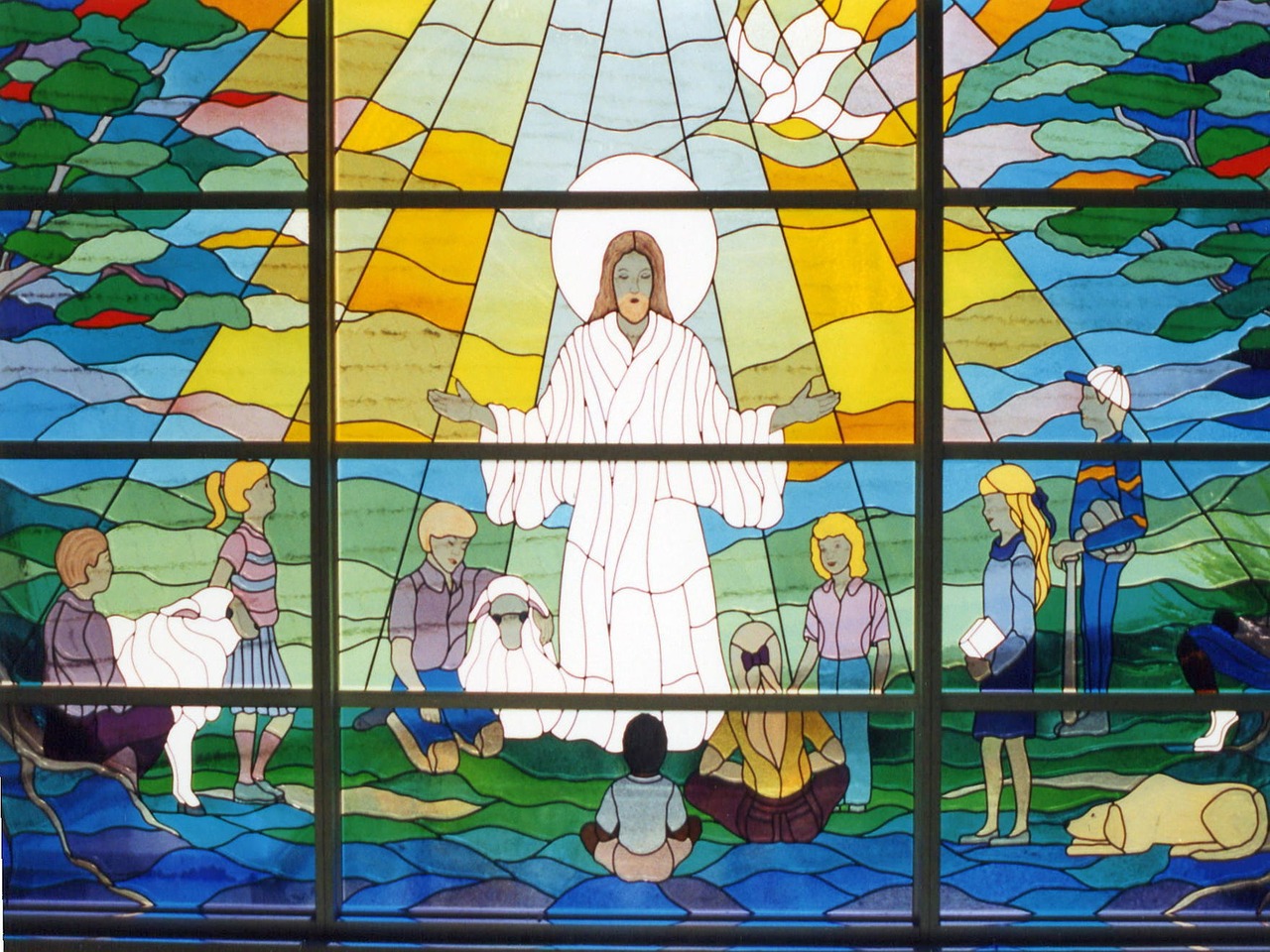
jesus

“You have hidden these things from the wise and understanding and revealed them to little children” (Matt. 11:25 ESV).

Important lessons
Elementary school is where it all begins—where the rubber meets the road, so to speak. Nothing you really think you know matters until you get to school and learn what the “real world” is all about.

I remember my first day of first grade. Barbara Roberts and I were sitting next to each other. For some long-forgotten reason I decided to push her. “Miss” Janie (actually Mrs. Janie) saw my indiscretion and promptly told me, “We don’t push people here.” I learned my lesson and life in first grade went on. Ready for day two.

If only the rest of life were that simple. If I always learned my lesson the first time around, I’d be much better off. Often, however, I have to be taught the same principle over and over before it finally sinks in. Without trying too hard, I can think of several very good examples of where this has happened in my life.

Stuck in a spiritual rut
Becoming a Christian is very similar to our school years. As new Christians we all start out as little children, only able to comprehend the most basic truths about God—that He created us, then provided salvation from our sin by becoming a man in Christ Jesus. It is only through study and the accumulation of many of life’s lessons that we grow in God and start to become what He wants us to be.

The problem is that many us never get past first or second grade in our spiritual lives. I know I’ve spent many years repeating the same spiritual grades over and over. By now I should probably be many years ahead—I think in a lot of ways I’m still stuck in elementary school, however.

Paul talks about this very problem in his letter to the church at Corinth. He writes, “But I, brothers, could not address you as spiritual people, but as people of the flesh, as infants in Christ. I fed you with milk, not solid food, for you were not ready for it. And even now you are not yet ready” (1 Cor. 3:1-2 ESV).

Childlike faith is the answer
God obviously wants us to grow in Christ. I think the key to this growth is to come humbly to Him just as a child would.

When His disciples were arguing over who would be the greatest in Heaven, Jesus used a nearby child as an example: “Truly, I say to you, unless you turn and become like children, you will never enter the kingdom of heaven. Whoever humbles himself like this child is the greatest in the kingdom of heaven” (Matt 18:3-4 ESV).

The innocence and fresh outlook of children is why the opening verse of this article rings true. God reveals His truths to those who are humble enough to set aside what they think they know and become like little children who are just beginning their quest for knowledge.

When you’re six or seven years old, you’re wide open to instruction. You don’t yet have the weight of a lifetime of worldly experiences jading your outlook on life. Children trust their parents and teachers because God made them that way out of necessity. As children, we could not survive if we didn’t have others to protect and instruct us.

Just call me Abba (“Daddy”)
Our spiritual lives are no different. If we don’t begin our Christian walk humbly as little children, it is impossible for us to grow into the kind of mature Christian God wants us to be. We can’t start at the top. It doesn’t work in our earthly lives, whether at school or at work, and it doesn’t work in our spiritual lives.

As Peter tells us, “Like newborn infants, long for the pure spiritual milk, that by it you may grow up into salvation—if indeed you have tasted that the Lord is good” (1 Peter 2:2-3 ESV).

We must continue our journey—seeking God’s truth daily. Then one glorious day we’ll graduate with honors and walk not across a stage to receive a diploma, but on streets of gold hand in hand with Jesus our Savior.

Thinking about Genesis…

Image

As I sat in the Easter service this past Sunday contemplating the miracle of Jesus’ resurrection, I had a thought. What if God gave us the creation account as the first story in the Bible so as to set the bar for the entire rest of His narrative? It makes sense to me.

If we know nothing about the Bible and the first thing we do is pick it up and start reading at the beginning with Genesis — BAM! it hits us right in the face.

You mean God created the whole universe from nothing? He just spoke it — and the world was formed?

The Genesis account is no doubt difficult for human minds to grasp, especially our western, educated, logical minds.

However, if we can wrap our heads around what the Bible tells us regarding the world’s creation, or even just suspend trying to understand it at all and just accept it on faith, then we allow ourselves the possibility to believe the rest of the miracles in the Bible.

Surely, if we accept that an eternal, timeless God created the world from nothing just by speaking what He wanted, then surely we can go on to believe that He can part the Red Sea and allow His people to escape to freedom.

Surely if we we’re OK with the fact that God created the first woman from a rib taken from the first man, the we can accept something small such as His son turning water into wine.

Healing leprosy? That’s nothing compared to populating the entire animal kingdom at will and then saving it by sending a male and female of each kind to seek refuge from a worldwide flood aboard a huge ark that, incidentally, took 120 years to build.

Of course, there is no way to prove my theory, but maybe if God has a Q&A session in Heaven, I’ll get an answer.


Image

Something to think about…

Image

I’ve always been troubled by the idea that two equally God-fearing, God-worshipping individuals could have such radically different opinions theologically, politically, and socially. For this to be possible, it seems almost as though God’s system is faulty. The truth should be clear and easy to discern.

Could it be that God designed things this way? Perhaps He wants it to be easy to grasp the fundamentals of the Christian faith (Jesus is Lord, He was crucified for our sins, and then was resurrected). This possibility leaves other, outlying details subject to interpretation, based on what kind of and how much importance each of us places on individual tenets of the faith.

If this is true, then we, as believers in Christ and earnest seekers of truth, never give up our quest for knowledge. We never quit thinking, never quit debating each other, never quit refining our own beliefs, never quit being sharpened by our fellow believers (Proverbs 27:17).

For example, I may place great emphasis on complete and total surrender of everything in my life to God, keeping for myself only enough material goods for a meager sustenance and lifestyle, allowing me to give generously to others and lift them up. Another person may cherish the freedom we have in Christ to buy, sell, and turn a profit,  thus creating a more lavish lifestyle for himself.

One individual may emphasize the social aspects of the gospel, crusading for justice and equality for all mankind. Another individual’s mantra may be based on a capitalistic interpretation of God’s word — “If anyone is not willing to work, let him not eat” (2 Thessalonians 3:10b).

Is any one of these approaches completely right or wrong, or are they all a part of the greater whole of God’s word and will?

I don’t have the answer to this question. I believe, however, that having such differing opinions is valuable to us as believers in Christ. As we keep searching for truth in the Scriptures, may God’s word become sharper and clearer to us, as we become more and more unified in our faith in Jesus.


Image