
The Art of Practicing Forgiveness

As human beings, perhaps one of the hardest things for us to do is forgive those we perceive as having wronged us. 

We naturally want to hold onto a grudge, wrongfully thinking that somehow that we are “getting back” at that person.

In reality, this does nothing but create a bitter core within us and keep us from experiencing true joy and freedom from those negative feelings. 

Author Marianne Williamson is quoted as saying:

Unforgiveness is like drinking poison and waiting for the other person to die.

When we hold on to that root of bitterness, it festers in our hearts, and we relive the offending event over and over, sometimes multiple times every day. 

It eats at us, and we can’t get the negative feelings off our hearts and out of our minds.

We should listen to God when He tells us to forgive. Ephesians 4:32 instructs us to:

Be kind to one another, tenderhearted, forgiving one another, as God in Christ forgave you.

Mark 11:25 tells us that we should forgive others so that God can forgive us:

And whenever you stand praying, forgive, if you have anything against anyone, so that your Father also who is in heaven may forgive you your trespasses.

God doesn’t want us to forgive others so that we can just sweep all our feelings under the rug. He knows that harboring unforgiveness will only hurt us and keep us from experiencing true joy in our lives. 

When we forgive others and let go of all those negative feelings, we can begin to experience the life that God has intended for us. 

We can’t have true joy and peace in our hearts when we’re focusing on the hurts that others have inflicted on us. 

Even if we forgive someone for how they mistreated or wronged us, we may still bring that thought to mind from time to time.

However, if we have forgiven that person,  we won’t dwell on those thoughts. When they do come to mind, they can be quickly dismissed because we are no longer holding onto hard-hearted feelings toward that individual.

We let all that go when we forgive them, realizing that God has forgiven us of our many sins.

Jesus even says that we should forgive others multiple times. When Peter asks Him how many times we should forgive someone—even as many as seven times—Jesus replies:

I do not say to you seven times, but seventy-seven times.

Matt. 18:22 (ESV)

Following Jesus’s example will help us experience more joy and have a more God-focused spirit to love others, understanding that we all make mistakes.

Realizing that we’re forgiven ourselves, and that we should offer this same grace toward the people in our lives, should motivate us to forgive and live in peace and harmony with others.

Freedom in Christ Is a Wonderful Blessing

Now the Lord is the Spirit, and where the Spirit of the Lord is, there is freedom.

2 Cor. 3:17

So if the Son sets you free, you will be free indeed.

John 8:36

And by him everyone who believes is freed from everything from which you could not be freed by the law of Moses. 

Acts 13:39

But now that you have been set free from sin and have become slaves of God, the fruit you get leads to sanctification and its end, eternal life.

Rom. 6:22

What does freedom in Christ mean? This is a question I have often pondered over my years as a Christian. To be honest, I’ve never understood the nuances of this idea, although I have some thoughts about it.

The concept of freedom in Christ stands in direct contrast to what many non-Christians believe that life in Christ is all about. 

A common belief is that being a Christian represents anything but freedom, and is instead built around a life of “Don’t do this” and “Don’t do that.” 

For many people, the idea of following Christ is about limiting what you can do and denying yourself all the fun things that life has to offer.

However, God tells us something different in His Word. All the verses above speak of the freedom we have as believers in Christ.

But what exactly is this freedom FROM or freedom TO?

First of all, as believers in Christ one of the most important freedoms we have is freedom from guilt due to our sins.

Christ died and was resurrected to pay the penalty for all our sins, both past and future. If you’ve accepted Jesus into your life, you don’t have any sin that has not been forgiven.

While we may still have to deal with the repercussions of our sins on this fallen earth, we’re no longer burdened with the guilt of our sin, as we’ve been made righteous in God’s sight by the blood of Jesus.

Our freedom in Christ means that we’re innocent and guilt-free.

Because of Jesus’s atoning death, which fulfilled the Old Testament law, we no longer have to make sacrifices to God to wash us clean of sin. Jesus did that once and for all. 

As believers in Christ, God sees us as new creations, clean and justified forever. That should lift our burdens and make our hearts feel lighter.

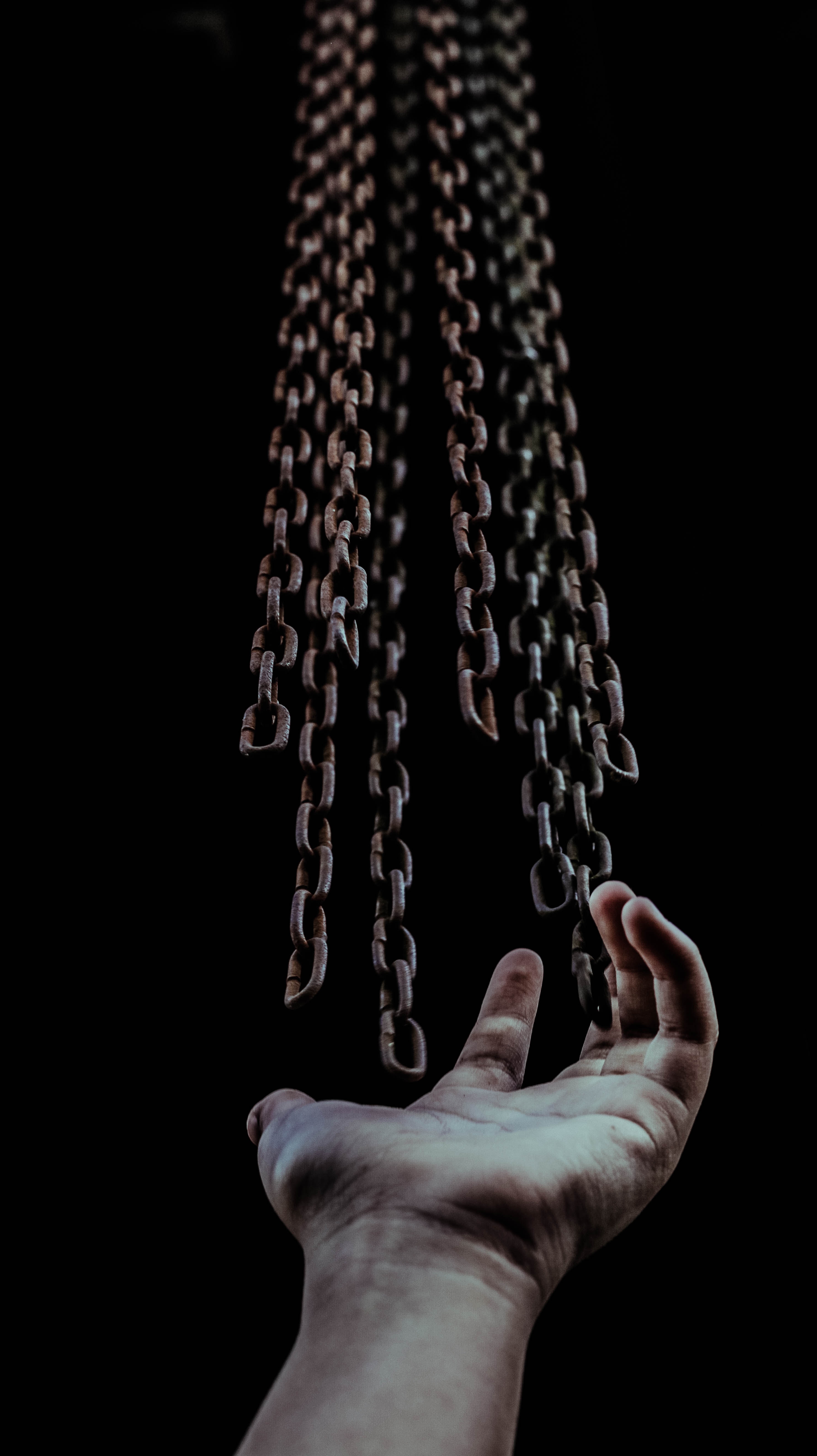
A second important aspect of our freedom in Christ is that we are free from the chains that sin shackles us with. Repeated sin drags us down and leaves us with an inferior quality of life. 

Jesus said,

I came that they may have life and have it abundantly.

John 10:10b

It is difficult to live joyous, peaceful lives when we have sin hanging over us.

With Jesus as our Savior, we should be living a better, more fulfilling life that we were before we accepted Him into our life. 

We are free to live our best life, even though we live in a fallen world plagued with sin and evil. 

God wants us to live each day to the fullest, without worry and anxiety over everyday concerns and problems that non-believers focus on (Matt 6:32).

Lastly, I believe that one of the best parts about freedom in Christ is the absence of death and the promise of eternal life that God has made to us as believers.

In one of the most famous verses in the Bible, we read,

For God so loved the world, that he gave his only Son, that whoever believes in him should not perish but have eternal life.

John 3:16

With Christ as our Savior, we have freedom over death. Once our fleshly bodies die, we’ll be given new spiritual bodies and live with God forever. We’ll never taste death.

That should give each believer something to eagerly look forward to.

This is just a quick summary of some of the important aspects of freedom in Christ. But it should give us hope as we deal with all the challenges this life gives us.

The American Dream – Is It God’s Will?

Freedom…that’s what’s at the heart of the American dream. As Americans, we’re granted the opportunity to pursue our desires. We have the liberty to live where we want to live, to work where we choose, to drive the kind of car we want, and to buy the latest fashions and walk around in style. Compared to many countries around the world, Americans have it pretty easy.

In fact, society actually compels us to pursue our freedoms. It’s practically un-American if we don’t demand our freedom and our rights to do as we please and live how we want (so long as we’re within the law, of course). 

However, is the American dream really God’s will? Does He support the great push for the individual freedoms that we’re guaranteed under our constitution? These are difficult questions to answer for sure. 

The essence of the American dream is rooted more in the rights of the individual than it is for the good of the whole. We are taught from a young age that it is our right in this country to be able to live as we so choose. It’s all about liberty and the pursuit of happiness.

However, you find a different kind of freedom mentioned in the Bible. We’re told that by becoming Christians, we’re then free from sin. Galatians 5:1 says, “For freedom Christ has set us free; stand firm therefore, and do not submit again to a yoke of slavery.” 

Sin is what enslaves us, and by accepting Christ into our lives, we break free from the shackles of sin and death. 

This is a far different idea of freedom than what the average American spends their days dreaming about. While there is nothing inherently wrong with aspiring to live one’s life as you want, God tells us that true freedom is only found in Jesus, and that His freedom will make us alive again.

In thinking about the Biblical idea of freedom, we have to take into consideration the idea of strengthening the church (the body of Christ) through our actions.

Rather than living solely to better ourselves and to amass as many belongings as possible during our lifetime, the Bible instructs us to love others, help others, and build up the body of Christ. 

A few verses later in the same chapter of Galatians we are told, “For you were called to freedom, brothers. Only do not use your freedom as an opportunity for the flesh, but through love serve one another.”

So, the freedom that we’ve gained through Christ is to be used to help our fellow man—not just for enriching our own lives. 

How often do we stop to think about our lives in these terms? Do we really take into account the welfare of our neighbors and value it as highly as we value our own freedom to live as we want?

I have a hard enough time grasping the whole concept of freedom in Christ, let alone figuring out how to use it to build up my next-door neighbor. Yet, that is exactly what we’re called to do as believers in Christ.

The goal is to lift up those around us, so that we’re all better off than we would have been otherwise. When we spend all our resources on ourselves, we end up contrary to the will of God, and quite often lonely and empty in the process. 

I’m talking largely to myself here, because I have been guilty of far too much self-focus for much of my life. If all I do is see how many toys I can buy, I’m not really accomplishing anything with the resources that God has entrusted to me.

Those around me, as well as myself, would be better off if I instead used my time, energy, and other resources to spread the word about the freedom found in Christ. 

That is true, Jesus-style freedom.

Who’s Really in Control?

I am the master of my fate, I am the captain of my soul.

From “Invictus” by William Henley

Many people will agree with the above quote from a famous poem, especially in this day and age.

This is especially true in the United States, as Americans tend to guard our freedom and autonomy fiercely. Most of us grew up learning to place high value on these concepts.

But is it true that we are actually masters of our own fate?

I would propose that to a certain degree we are. We make many choices each day about mundane things in our lives—what clothes to wear, what to eat for lunch, whether to read or watch TV. The list could go on and on.

However, I believe the major facets of our lives are different. Do we really determine our course in life, or is God the Master who’s in control? 

The Bible gives us a pretty clear answer:

Many are the plans in the mind of a man, but it is the purpose of the Lord that will stand.

Proverbs 19:21

God’s will trumps all, even when it comes to kings and leaders:

The king’s heart is a stream of water in the hand of the Lord; he turns it wherever he will.

Proverbs 21:1

It’s pretty easy to see even from just these two examples (and there are many more to be found in scripture) that nothing happens that God doesn’t allow. Everything fits into His divine plan. 

So, as great and noble as Mr. Henley’s verses ring in his poem, he is not altogether correct in his assumption. Certainly, we cannot say we are “the captain of my soul.”

This may be true to some small extent, but the entirety of our souls is a whole other matter. 

We ARE the determinant of where we spend eternity, as that depends on whether we’ve chosen to accept Christ as our Savior.

However, even making that choice is dependent on God opening up our hearts and willing us to come to Him (1 Corinthians 1:9).

As Americans, we may not like to think that we don’t have complete control of our destiny, but I don’t believe we can objectively read the Bible and conclude that we are. 

God is firmly in control, not only of our destiny, but that of our nation and our world. Even in the craziness that our world is facing at the moment, He still sits on the throne. 

Remember, nothing that is happening today, or will happen in the future, comes as a surprise to God. He foresaw every act by every human long before Adam and Eve were ever placed in the Garden of Eden.

So, it should actually be a relief to us that we are not masters of our fate, because surely we would mess things up.

The often-poor choices we make on a daily basis should show us well enough that we’re not capable of completely handling our own destiny. 

Thank God that He’s in control and that nothing happens apart from His will. I know that makes me feel better. 

Even the evil in this world He allows so that His ultimate purposes will be fulfilled. Those purposes I know are for the best, for

we know that for those who love God all things work together for good, for those who are called according to his purpose.

Romans 8:28

So, don’t worry about having it all together every day. Be thankful that God is in control and you aren’t. Things will definitely work out better that way.

Trust in God No Matter What

Trust in the Lord with all your heart, and do not lean on your own understanding.

Proverbs 3:5

What does it mean to trust in the Lord with all your heart? And to not rely on your own understanding?

These are deep words for certain. I believe we need to go beyond just a surface explanation of what it means to trust in God, as the verse includes the words, “with all your heart.”

That means we are to trust, rely on, depend on, and put all our weight on God. With every fiber of our being. No matter what we’re doing, we’re called to trust in Him.

That’s hard to do because we’re human. As mere humans, we tend to focus on what our senses reveal to us. We look at what we can see, hear, and touch.

Relying on God requires more than that. It’s a deep dependence of surviving on God and Him alone.

It’s knowing that God is our provider for everything that we need to sustain us. He wants us to rely on Him—that’s why He tells us to do just that.

If we obey God, adopting and maintaining the mindset that everything comes from Him, we can take it a step further and comfortably give Him all our cares and worries—which He commands us to do: “Casting all your anxieties on him, because he cares for you” (1 Peter 5:7).

However, if we don’t first accept the fact that everything in our lives comes from Him, there’s no way we can ever hand over our cares to Him.

Just as God wants us to lean into Him and rely on Him, He also wants us to be free from the worry and anxiety that everyday life can produce. Philippians 4:6a tells us, “Do not be anxious about anything.”

These are fantastic, life-changing words! God literally commands us to live a worry-free life!

He doesn’t want us weighed down by our circumstances, but rather, He wants us to rely on Him, lean into Him, and give Him any burdens we’ve been carrying.

This is the freedom that so many of us desperately need each day. I know I do. Just the thought that God wants my mind to rest free and easy gives me hope that I don’t have to worry and fret about finances, my career, my relationships, and a host of other things.

And it should give you hope, too.

Everywhere I Turn Is a Reminder

TobyMac’s words filled my car as I drove down the road: “Everywhere I turn is a reminder…I see You in everything, all day.”

I had heard those same words countless times before, but for some reason, they hit home with me this time. 

All we really have to do to see God is just look around. He’s everywhere and in everything. It’s easy to forget about Him in the hubbub of everyday, first-world life. Sometimes we need to just take a few moments to do a mental inventory of God and His grace.

Life is certainly not perfect, and there are many awful things we can focus on (as I write this, the Coronavirus is ravaging the world), but we can just as easily look at all the ways God has blessed us.

Speaking of the first world, in our enclosed little bubbles we forget that billions of people live in poverty in other parts of the world. 

The things we take for granted—like clean water, nutritious food, a sturdy roof over our heads, a steady job, and a car to take us to that job—are all parts of life that vast numbers of people do without every day. 

Just owning a car makes us among the wealthiest people on the planet. Can you imagine that? 

We may think we have it rough when our old car is giving us fits, but it is actually a luxury item that billions of people don’t have access to. 

Think about the ability to walk to the sink and move a handle, allowing fresh, cool water to pour into a clean glass for your enjoyment. God blessed you with that today. 

You could have been born in a third-world country where you had to walk miles to find the closest water, then be forced to share it with livestock. It could be filthy and diseased, but it’s all you have.

Everyone, or nearly everyone, reading this has never experienced that kind of poverty—and likely never will. We really can’t imagine what that must feel like as we live in our climate-controlled houses with our climate-controlled cars sitting out in the driveway.

God didn’t have to bless us with these creature comforts, but He did. For that, we can be thankful every day. These things serve as a reminder of who He is and what He’s done for us. 

Just having the freedom to walk outside and see the sky, the trees, and the rest of nature is a gift as well. Many people don’t have this opportunity for one reason or another. 

People who are homebound, or incarcerated, or trapped in human slavery don’t have this freedom. I can get up right now from my chair and step outside and enjoy a taste of God’s goodness on this beautiful spring morning. Not everyone can.

The point is that there are signs of God’s goodness and grace wherever we look. We don’t have to search very long to find evidence that he’s blessed us in awesome ways.

We can take heart in the fact that He cares enough about us to show His love in these ways.

You may be saying to yourself, Well, what about those people who ARE living in poverty across the world? They don’t have these things to be thankful for. They don’t have a reason to acknowledge God.

No matter what situation you, I, or anyone else find ourselves in, God has never forgotten about us. 

Just remember Joseph’s story in Genesis. He was sold into slavery by his brothers and falsely thrown into prison later on. He spent years locked up before his chance came to be free.

Had God forgotten him? No. God works out all things in His own time. He was working behind the scenes while Joseph waited patiently in prison. Joseph knew God’s goodness and that He would not forget about him. 

In time he was freed and eventually became the number two man in Egypt, second only to Pharaoh himself.

The key is remembering that God is good, He’s everywhere, and He has a plan for you. 

Take notice of Him in the small things each day. It will do wonders for your mood, plus it will help draw you closer to God.

And that’s what it’s really all about, isn’t it?