Something to think about…

Image

I’ve always been troubled by the idea that two equally God-fearing, God-worshipping individuals could have such radically different opinions theologically, politically, and socially. For this to be possible, it seems almost as though God’s system is faulty. The truth should be clear and easy to discern.

Could it be that God designed things this way? Perhaps He wants it to be easy to grasp the fundamentals of the Christian faith (Jesus is Lord, He was crucified for our sins, and then was resurrected). This possibility leaves other, outlying details subject to interpretation, based on what kind of and how much importance each of us places on individual tenets of the faith.

If this is true, then we, as believers in Christ and earnest seekers of truth, never give up our quest for knowledge. We never quit thinking, never quit debating each other, never quit refining our own beliefs, never quit being sharpened by our fellow believers (Proverbs 27:17).

For example, I may place great emphasis on complete and total surrender of everything in my life to God, keeping for myself only enough material goods for a meager sustenance and lifestyle, allowing me to give generously to others and lift them up. Another person may cherish the freedom we have in Christ to buy, sell, and turn a profit,  thus creating a more lavish lifestyle for himself.

One individual may emphasize the social aspects of the gospel, crusading for justice and equality for all mankind. Another individual’s mantra may be based on a capitalistic interpretation of God’s word — “If anyone is not willing to work, let him not eat” (2 Thessalonians 3:10b).

Is any one of these approaches completely right or wrong, or are they all a part of the greater whole of God’s word and will?

I don’t have the answer to this question. I believe, however, that having such differing opinions is valuable to us as believers in Christ. As we keep searching for truth in the Scriptures, may God’s word become sharper and clearer to us, as we become more and more unified in our faith in Jesus.


Image

In Support of Kids!

Image

Recently I was chatting with an acquaintance of mine. He is one of those guys who has a lot of friends. Countless times I’ve heard him mention something about “this buddy of mine”.

My acquaintance (I’ll call him Bob for simplicity) and I were talking about divorce, as he went through a divorce recently and has a young daughter. We had been discussing child support in terms of the mandatory court-ordered kind, but our conversation had drifted more into supporting a child in general.

Bob mentioned something to the effect that a child is the gift that keeps on giving — meaning not something positive, but in the negative sense in that it is something you have to keep paying for. “I’ve only got 8 more years though, and then that’s it,” implying that his financial obligation would be over when his daughter turns 18. To be fair, I’m not sure if he merely meant the monthly child support payment he makes, but it came across to me that he meant his entire obligation would end at that time.

As if that weren’t bad enough, a few moments later in the conversation Bob referenced “one of my buddies who got this ol’ girl knocked up.” He said, “I told him not to marry her just because you got her pregnant. Just look at it as another payment.”

Of course, Bob was talking about the assumed child support payment the father would take on.

Image
How can you look at a child as “just another payment”. Certainly, the father should take financial responsibility for the child, ensuring that his or her needs are adequately met (not to mention those of the mother).  However, true responsibility for the child goes far beyond buying diapers, clothes, or school supplies. Children need a father just as much as they need a mother.

According to statistics recently released by the Centers for Disease Control and Prevention , almost 41% of all births in 2012 were by unwed mothers. More shocking, at least to me anyway, is the statistic from the U.S. Census Bureau that 62 percent of women aged 20-24 who gave birth in 2011 were unmarried.

These figures are hard to digest. No wonder kids these days are suffering — emotionally, intellectually, mentally, and physically.

I realize many people in the world believe that it is old-fashioned to insist that a child be reared with one mother and one father, especially given today’s wide range of acceptance for what is termed a “normal” family.

I hate to say it, but as long as our culture believes it is acceptable to ignore God’s plan for the family, we will all continue to suffer.  He defines what a family should be in many places throughout the Bible.

Genesis 2:24 says, “Therefore a man shall leave his father and his mother and hold fast to his wife, and they shall become one flesh.”

Mark 10: 9 expands  on the idea of husband and wife remaining together: “What therefore God has joined together, let not man separate.”

I’m not naive. Certainly, I understand that there are unavoidable circumstances where children cannot have both parents — a married male and a female — to raise them. I have all the compassion and sympathy in the world for single moms (and dads), and I know quite a few of them. I also realize that children are capable of thriving in a less-than-ideal environment. But why put our kids at risk for a lifetime of struggle and hardship if it’s not necessary?

Summing up my argument, as much as it is possible we should strive to create the ideal type of home as God set forth for us — a matched set of married parents living together with their children (and, of course, a chocolate lab).

Image

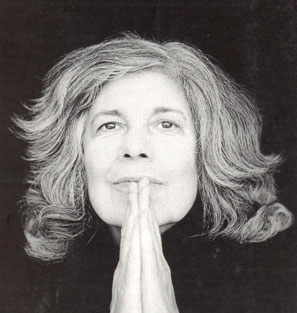
My Apologies to Susan Sontag

“I believe…that the novels of Susan Sontag are self-indulgent, overrated crap.”

How much of what we believe is based on few actual facts or, worse yet, no facts?

Recently I realized that the whole of my opinion on Susan Sontag has been based on the quote above from the the movie Bull Durham. I haven’t even seen the movie, other than a couple of famous scenes, including the famous Crash Davis rant from which this quote was taken.

I often stumble upon Sontag’s name on the various websites I frequent, where she is held in high regard. Some part of me has always dismissed her as a feminist who wasn’t worth taking time to learn more about. Finally, after the umpteenth time of coming across a reference to her or something she wrote or said, the idea of her remained in the forefront of my brain long enough for me to realize that I had never personally researched her or read anything she’d written.

I thought a bit longer about my opinion of her. Sure, I knew her name, but that was all I knew with certainty. I had formed my entire opinion of her based on one line from one character in one movie that I had not even bothered to watch in its entirety. I never realized how thin my actual knowledge of her was, and had been for 15 or 20 years.

What’s even worse is that the impression of Sontag I had in in my mind was all formed subconsciously. Even though I couldn’t have even come close to reciting the quote from Kevin Costner’s character, its disparaging remark about her had left a negative, distasteful impression of this woman with me, causing me to dismiss her immediately as an “unworthy” feminist every time I ran across any mention of her.

And I’m not even sure how I got that she was a feminist out of the character’s statement; there was no mention of feminism at all, only self-indulgence. All these years I had remembered that there was a quote about her in the movie, but not at all what the quote actually said — only that it was negative.

How many other beliefs and opinions in my life have I formed from flimsy information, perhaps on a subconscious level without realizing it?

Perhaps this should be a lesson to myself to take time occasionally to pause and reflect on my values and beliefs, making careful note as to where I’m getting my information and what criteria I’m using to form my opinions.

I Don’t Eat Worms, Especially on Vacation

Image

The first day back at work after over a week’s vacation went pretty much as I thought it would – hectic in the morning, yet calmer and saner in the afternoon.

Certainly I didn’t want to come back to work. Why would I ever want to get up at 6:30 in the morning and drive through traffic in subfreezing temperatures, just so I can hang out at work for 10+ hours?

Admittedly, given our lack of discretionary spending money, I was tired of sitting around the house with little to do. If my wife and I were getting along better these days, then it might not have been so bad.

A couple of days ago, however, she had been cleaning, and ended up moving all my toiletry items around in the bathroom. That was totally unacceptable. A fight ensued, and I got very little out of her in the way of civilities for the rest of the day. Not fun.

Given strife at home, coupled with no money to leave home with to spend on something, it was time to go back to work. Albeit, I wish work would start a little later in the morning.

The earliest I awoke on any day of my vacation was about 9:30. Yes, it felt good to get a relatively early start that day, but I was just as content as when I remained nestled in my bed until 11:00 or 12:00 on other days.

One particular day when my wife and I had been arguing earlier that morning, I stayed in bed until 2:00. I wasn’t sleeping the whole time; I did, however, just want time to myself to hide from the world and regroup.

My son and I were discussing sleep habits recently. I told him that ideally I would go to bed between 3:00 and 4:00 am, and get up about 9:00 or 10:00. I am very much a night owl – always have been. I enjoy the quiet solitude of a late night by myself. I don’t know that my brain is necessarily more alive at that time (as opposed to earlier in the evening), but it just feels better.

Recently I read a particularly interesting portion of Anais Nin’s diary in which she describes Henry and June Miller’s nocturnal habits. As much of a night owl as I am, those two had me beat. Of Henry, Nin says, “At dawn he likes to sit and watch the tired prostitutes walking home.” Of June she writes, “She hates daylight.” She is “a woman whom daylight cannot touch”.

I like to stay up late, however I prefer to fall asleep well before the sun comes up. It messes with my head otherwise – the whole circadian rhythm and all.

Interestingly, I went through a period in college when I voluntarily got up every day about 7:30 or 8:00, even on weekends. I’m not sure why I did this. Looking back on this time, I have to say it was pleasant; I felt like I was getting a good jump on the day.

Ah, how young and foolish I was back then, neglecting my beloved sleep for a few extra rays of sunshine.

I don’t believe I’ll ever truly be an early bird. No ragrets there.night owl

The One Where I Realize I Really Can Change

My wife made a very interesting statement last night. When referring to an individual we know, she said that regarding his life and his future he has an “employee mentality”, rather than an “ownership mentality”.

When pressed to elaborate, she explained that he does best when he has someone telling him what the next step is. OK, the next thing you need to do is X. And after that you’re going to go to Y.  If he doesn’t have a clear cut path to follow, he tends to wander, go nowhere, and do nothing.

THAT IS SO ME! I didn’t tell my wife this, but I figured the same thing out about myself several years ago.

I did well in school. I made good grades from kindergarten all through high school and graduated with a 4.0 GPA. I did well in college also. I never cut class, I did my assignments, and I graduated (almost) on time.

However, my life since college has been a different story.

In the years just after graduation, I held a number of different jobs in several different careers. One year I had five different jobs, having been fired from three of them (sales positions), and abruptly choosing to leave the other two (also sales positions). I guess it’s obvious what line of work I don’t need to pursue.

I finally found a decent career and have had the same position for a number of years. It’s comfortable and doesn’t stress me out most of the time, but it’s definitely not my dream job.

I’ve always felt like I’ve had a settle-for kind of life as an adult, at least as far as my career path goes – not too bad, but not great either.

I believe this is because I’ve never been proactive about my career. I’ve always expected that things would just fall into place. They always did throughout my school years. Surely, I could expect more of the same as an adult. Right?

Ahhh, but that’s not the way life works. After college, the path is wide open – at least for me it seemed it was. It was as if I’d reached the end of a narrow path through a dense forest, and suddenly before me lay a vast open stretch of virgin land. Untrodden, untouched. My choices were only limited by my desires and creativity.

Alas, I floundered. Having no clear direction laid out before me with step-by-step directions, I retreated as it were. Too many choices equaled no choice at all for me.

What is the lesson I’ve learned from all this?

Even though I “wasted” a good number of years in jobs I didn’t really want to do, I did pick up valuable career skills and a ton of experience in my specific industry.

At this point in my life I can parlay my skills and experience into a career I really want. I believe that the world once again offers me great opportunities. I need simply to transition my strongest skill – writing – into a marketable product. Perhaps easier said than done.

At any rate, this has become the focus of my mid-life career adjustment, and how I will at last embrace an “ownership mentality” of my life.

See you when I get there.

Just one more question, please…

Am I a closet deist? I think I might be just a little bit. I struggle greatly with the question of how much control God exerts over the world He created.

A big part of me thinks most of the time that God created the natural world and all its many, many systems and now just pretty much lets things take care of themselves.

For example, humans have sex to create more humans. Whether or not a woman conceives is up to one, mighty sperm to break through the walls of her egg. God created all these individual components of the reproductive systems of both the male and the female. Now they do their thing. Conception is totally left up to nature, as are the myriad of other systems in our world, and only rarely does God intervene to change the course of nature (in order words perform a miracle). Why should He have to step in? He set the world up long, long ago, and now it’s running just fine on cruise control.

That’s one theory of mine.

But what if things are not like this? Perhaps God always guides the one sperm He wants to penetrate the egg, having a plan all along to create this one particular individual that He will watch and cheer for from his or her birth, all the way through life, up until the moment of death.

If a lion attacks a group of zebras, snagging a young one in its powerful jaws, is that Providence? Or is it just nature? Or is nature Providence? Does God will that the lion catch the zebra, or is He sitting high up in the stands in Heaven watching all the action take place? He knows what will happen of course, but does it happen because of the excellent programming He put into His world so long ago, or at that moment does He point and say, “That lion will catch that zebra right there”?

Is the world running off of God’s huge program, Universe 1.0, or is God actively calling the shots at each moment for each person?

Perhaps I’m asking too many irrelevant questions. We will never know the answers this side of Heaven, and maybe not even then.


But that’s OK.

Even though multiple sclerosis is kicking her butt right now, my sister is tough. She has the will to fight through her disease and finish strong.

She was diagnosed over two years ago, but I didn’t know about her illness until recently. When she told me about it one Friday afternoon on the phone, I cried a little. I think what hurt most is that she’d been dealing with the pain and steady decline in her abilities all this time without my being available to her for support. She has a husband, as well as a strong network of friends nearby, but I was sorry that as her brother, I had not been there for her to lean on if she wanted that.

Shaky, wobbly, legs requiring a walker, and fingers that have a mind of their own are only a few of the things she’s had to endure. She had to quit work last year because she would often bump into walls, as well as forget important details after just a few minutes. Her depression deepened at this point. An occasional seizure and the inability to drive have also added to her problems.

Through this all, however, she has remained steadfast. Too many times to count, I’ve heard her say, “But that’s OK.”  Tripping over a rug and crashing to the floor — But that’s OK. I’ll make it through.  Isolation and boredom — But that’s OK. I’ve got my cat. Another medication to try, maybe one with awful side effects — But that’s OK. I’ll take it moment by moment.

faith
I remember a particular Peanuts comic strip from when I was a kid. Charlie Brown is talking with one of his friends and he remarks that he used to take life one day at a time, but now he’s down to only half a day at a time.

This reminds me of my sister. When you’ve got nothing but time, all you can focus on is the next moment or you’ll drive yourself crazy with the what ifs.

She’s been an inspiration to me in her illness. I’m dealing with my own physical problems, the outcome of which is unknown at this point. I look at her and think, If she can deal with her disease and all that comes with it, then I can handle what little I’ve got in front of me.

She’s shown me what to say to myself when I’m faced with yet another challenge. But that’s OK. Those words have power; they bring the spirits up. I can say that because I’ve used them.

An unexpected bill in the mail — But that’s OK. God will provide just like He always has. Feeling helpless when I wrap a hand around my wrist and my fingers almost touch because there’s so much less muscle there now — But that’s OK. God’s overseeing all this. He has a plan.

Neither she nor I are experiencing anything He doesn’t already know about — that’s for certain. If He believes in us enough to allow these circumstances, we can both push through. Whatever comes our way, we can both make it — But that’s OK.

Some thoughts on depression

Life really sucks sometimes; sometimes I just say to myself that this whole experiment we call life just really hasn’t worked out for me. This is a familiar theme for me; I have written about it often over the last three decades.

In fact I really feel that my whole adult life has been some kind of awful comic tragedy. Nothing that I aspired to be or do when I was growing up has happened for me. I’m sure much of this is my fault, but it’s hard for me not to feel like the deck was somehow stacked against me from the beginning.

If I could just quit it all I would. I’m not implying suicide; I could not do that. But if I could somehow just quit, walk away from it all, I believe I would do so. If I could be reassured that my family would not realize my absence, and that there would be no weird cosmic repercussions, then I would just cut my losses and go cash in my chips. I would never know the difference.

However, if I choose to look at things differently, to flip the chip over so to speak, I might have a different view. It’s true — nothing has quite worked out how I wanted it to, but does that mean that my life is as bad as I think it is? If my dreams have not been fulfilled, does that automatically mean that the end result is bad?

Many (maybe most) people would say no. I think right now I’ll have to agree with them. If I only envision one outcome, one life, as “good”, or “successful”, then I’m definitely going to be disappointed. Flexibility is crucial to enjoying life.

Even though I realize that adaptation is the key, the stubborn side of me still wants to resist. Deep down I have a sense of entitlement. I feel as though I shouldn’t have to adapt, that however I am, whatever I want, whatever I dream of being and doing, should happen just like that. The way I am is the right way and the forces of the universe should align themselves with me.

To say that this kind of thought process is crazy is really putting it mildly. I know this; I’m not trying to kid myself.

However, old habits acquired in childhood are hard indeed to break. When circumstances turn against me, quite often I just don’t feel like trying to adapt, to look on the positive side. I don’t want to change and don’t feel like I should have to — the end.

I’ve noticed something important about the way depression works in me. If I am depressed, one of two mindsets will be true. Either I will want to try to feel better, or I will wallow in self-pity and not want to change. If I feel the second way, then my belief at that time is that things outside myself should change — not me.

I believe this last sentence is a major key for helping me understand and overcome depression.

Has anyone else found this to be true in their own lives?

It’s the small things…

Contentment

Just like I’ve done thousands of times before, I got out of my car this morning and began walking toward the door to my workplace.

This time something caught my eye, however. A fresh dent on the left front fender of my car — not too bad, but definitely visible. It was up higher than another car would have caused; it was perhaps done intentionally, perhaps not.

I may try to fix it myself, or I may just leave it alone to avoid making it look worse. It’s not that big a deal in the big scope of things.

After I got inside the building to begin my work for the day, I remembered what I had just been listening to on the radio before parking my car. Chuck Swindoll had been teaching on the book of Ecclesiastes; this morning’s topic dealt with the folly of riches.

He gave an illustration of a welder who was perfectly content in life because his concerns consisted of getting out of bed, going to work and welding whatever was put in front of him, going home and spending time with his family, watching TV, and going to bed. He didn’t have an abundance of wealth that he worried about losing.

I thought of Ecclesiastes 5:12: “Sweet is the sleep of a laborer, whether he eats little or much, but the full stomach of the rich will not let him sleep.”

When I recalled the teaching on the radio, I remarked to myself how that verse in Ecclesiastes is indeed very true. I wasn’t really worried about another dent in my car because it’s 18 years old and already has other dents. What’s another small one? If I owned a brand new car, I’d be fretting about calling my insurance company, possibly filing a police report, etc.

Having an old car eliminates all that concern. Sometimes I lament that my car is not newer, but at times like this, it really is a sweet blessing.

contented-froggy

Sags and Bags

Looking back through old high school yearbooks is always fun for me. Taking time to sit down and revisit old memories is one of the things I like to do best. Usually it happens when I’m not expecting it. I’ll be cleaning out a closet or going through some old boxes, and all of a sudden this wonderful book of memories is in my hand.

I’ll see an old friend’s picture and I’ll think, Boy, he looks really young. Nowadays he looks old and wrinkled, telltale signs that he is losing the battle with time and aging. He’s got the same face as he had then, but it is definitely more complex now — more wrinkles, lines, and sags. Underneath is still that fresh-faced teenager, except that the passing years have added baggage to it.

It reminds me of using Photoshop to enhance a photo or drawing by adding layers to it. The original image of the person, landscape, or object is still there, only now it has been deepened with additional features.

I believe that the process and experience of writing is similar to the way a person ages.

Periodically I will take time and look through old journals of mine that I keep safely locked away in an old suitcase I bought at a yard sale. Some of the entries date back almost 30 years, but the most interesting ones I wrote in my high school and college days.

In particular, I have an old, blue, single-subject Mead notebook that we were required to journal in for my English class my senior year in high school. We would write in them, and every couple of weeks the teacher would collect them, read them, make comments, and return them to us.

The content of this particular journal is not nearly so personal as most of my other writings, due to the fact that I knew someone else would be reading it. Our teacher told us over and over to “write what is personal, but not what is private.”

Richard Nordquist does a wonderful job here of explaining the difference between public and private writing. He also tells us how keeping a journal can be therapeutic and gives us a few suggestions on how to get started. His article would have been helpful to me back in high school,  as I was often stretched in trying to find suitable topics to write about, something that was interesting to me and that I thought the teacher would find worthwhile.

Every time that I go back and read through my old Mead notebook I am amazed that some of the thoughts, feelings, and fears I had as a 17- or 18-year-old are still there, bouncing around in my brain.

I was so worried about the future back then. Many entries detailed my fear at choosing the right college for the following year, and what my life would be like one year from that day, and about girls that I liked but were too afraid to ask out. I still think in much the same way as I did then; many of the fears I have now fall along similar lines, although with more adult themes..

Even though a lot of times the subject matter I write now is very similar to what I wrote as a teenager, my emotions and my writing style are more mature, more elaborate now than when I was younger. I may write the same things I did then, but hopefully I write them better now, with more layers, more depth.

Same face, more wrinkles. Same writing style, more depth.

My years of life experience — with all its pain, sadness, happiness, and tears — makes this added dimension possible. It is something that can not be substituted with something else, nor can it ever be taken away.

  When I sat down recently to read through this treasured old notebook, I noticed a couple of very intriguing things. After a long fall and winter of lingering, grinding depression, in March of 1987 — the latter part of my senior year — I wrote down four occupations that interested me:  Air Force pilot, drummer, psychologist, and writer.

I don’t know exactly how I came up with this list, and I don’t really recall wanting to pursue any of those occupations back then (except maybe writing, but that would have been a far-fetched idea at the time).

I suppose that I did dream of these others, however, because the ink on the page still can’t lie even after all these years.

The interesting part of this story is that of the four occupations I had written down so many years prior, in the weeks leading up to this last re-reading of the journal, I had spent time thinking about three of them (the Air Force would never have let me fly with my eyesight).

It’s amazing that after all these years, and all the jobs and careers I’ve experimented with, I still return to this same core of interests.

I’ll be forever grateful to my English teacher that year, Mrs. C., for requiring us to maintain a journal. Rereading it periodically over the years since graduation has been a wonderful source of joy and inspiration.

I recently found this blog entry from Mya. It’s amazing how similar her experience is when she looks through her closet and sees clothes and accessories dating back over the years and decades. She calls it “my window to myself”. This perfectly describes how I feel about my high school journal.

The tendency to romanticize the past has always been a significant weakness of mine; it goes hand and hand with my depression. I read in my blue journal that even as an 18-year-old I was longing for a simpler time.

In my journal I recalled camping out in my backyard with my best friend when we were in fifth grade. I was nostalgic for the movies and music of that wonderful summer. Reliving those childhood days, if only in my mind, helped me deal with the stresses of facing an unknown, potentially harsh future after high school graduation.

Nowadays my writing as an adult often reflects a longing for the simpler days of high school, when my biggest concerns (as recalled almost three decades later) were homework and girls — not a mortgage, kids, health concerns, and a job that is less than glamorous.

It seems I’ve never been satisfied with my present life.

I continue striving to take joy in my life on a daily basis. Maybe I just need to listen to God a little more closely.